
Oat Flour
Oat flour is finely milled oat material used in baking and as a thickener.
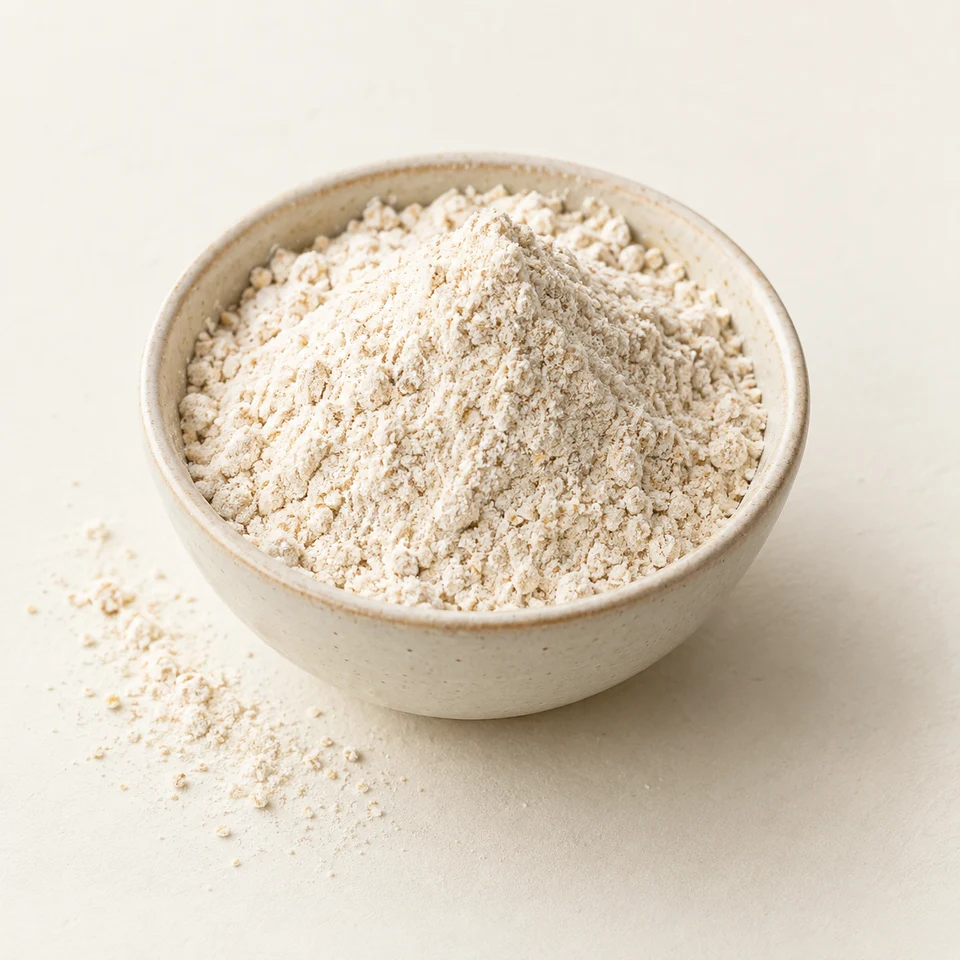
About Oat Flour
Oat flour is oats milled into a fine powder, usually from cleaned oat groats or flakes. It is cream to pale beige and has a mild cereal aroma with a soft, slightly sweet flavour. The fineness can range from powdery to visibly granular, and the flour may be milled from either untreated oats or previously rolled oats.
It is used in breads, biscuits, cakes, pancakes, batters, crumb mixtures, and other baked foods, and can thicken some soups, sauces, or fillings. Oat flour absorbs liquid differently from wheat flour and may produce a tender, somewhat dense or sandy texture depending on the grind and the proportion used in a formula.
Oat flour is sold as a dry, loose flour, with appearance varying from fine powder to visible granules. Finer milling disperses more evenly and can produce a smoother result; coarser material remains more noticeable. Mixing it into a batter or cooking it in a sauce changes its dry powder form and develops body.
- Ingredient type
- flour
FOLLOW IT TO THE PLATE
Where will you meet it?
Explore the dishes that use this ingredient and their country and cuisine connections.
Explore linked dishesON A MENU OR LABEL
Find local names and written forms to help recognise this ingredient.
See local namesWhere oat flour appears
3 linked foodsFind foods to recognise by country and type. Recipes and products vary; these are recorded ingredient connections.
Showing 1–3 of 3
Desserts

Soups
Breads
Ingredient connections awaiting review · Coverage is still growing, including packaged snacks.
Name examples awaiting language review. Confirm the specific food or product.
Local names for oat flour
Names and romanised forms to recognise on menus and labels.
oat flour
harina de avena
farine d’avoine
Hafermehl
farina d’avena
farinha de aveia
havermoutmeel
farina de civada
овсяная мука
ovsyanaya muka
вівсяне борошно
vivsyane boroshno
mąka owsiana
ovesná mouka
ovsená múka
zabliszt
yulaf unu
αλεύρι βρώμης
alévri v rómis
دقيق الشوفان
daqīq al-shūfān
آرد جو دوسر
ārd-e jo dosar
जई का आटा
jai ka āṭā
ওটসের আটা
oṭser āṭā
ஓட்ஸ் மாவு
ōṭs māvu
ఓట్స్ పిండి
ōṭs piṇḍi
ಓಟ್ಸ್ ಹಿಟ್ಟು
ōṭs hiṭṭu
ഓട്സ് പൊടി
ōṭs poṭi
燕麦粉
yànmài fěn
オート麦粉
ōto mugi-ko
귀리 가루
gwiri garu
bột yến mạch
tepung oat
tepung oat
alévri v rómis
Romanised form
ōṭs hiṭṭu
Romanised form
ōto mugi-ko
Romanised form
GLUTEN-FREE WHOLE GRAIN OAT FLOUR
Search alias · Not a confirmed translation
Oat flour, partially debranned
Search alias · Not a confirmed translation
ōṭs māvu
Romanised form
daqīq al-shūfān
Romanised form
vivsyane boroshno
Romanised form
gwiri garu
Romanised form
oṭser āṭā
Romanised form
yànmài fěn
Romanised form
jai ka āṭā
Romanised form
ōṭs poṭi
Romanised form
ovsyanaya muka
Romanised form
ārd-e jo dosar
Romanised form
ōṭs piṇḍi
Romanised form
Available names only. Languages may be spoken in other countries; a name alone does not identify every ingredient in a dish.
Name not available yet.
A name in English has not been added for oat flour. Choose another language to see its available names.
Oat Flour nutrition & diet
Oat Flour nutritional value
Oat flour, partially debranned
Per 100 g of the edible portion in the recorded food form.
- Calories
- 404kcal
- Protein
- 14.7g
- Carbs
- 65.7g
- Fat
- 9.1g
Reference values for the specific food form shown. Other varieties, brands and preparations can differ.
Portions & preparation
Use the flour portion specified by the recipe and account for its fine texture, which absorbs liquid differently from whole or rolled oats. Compare stone-ground, whole-grain, sifted, or blended products separately. Baking, thickening, and uncooked applications may require different reference forms and preparation assumptions.
Compare the right form: Match references to finely milled oat flour in the stated preparation, distinguishing whole-oat, sifted, toasted, instant, and flour-blend products.
Diet considerations
Oat flour is plant-derived from oats. Compatibility can change when it is blended with wheat or other cereals, processed in shared facilities, or used in a recipe containing eggs, dairy, or animal fats. The flour itself is distinct from oat beverages and cooked oatmeal, while the recipe determines the final dietary pattern.
AI-authored reading notes · Awaiting editorial review. Measured values, where available, have a separate source above.
Dietary compatibility
- VeganTypically compatible
- VegetarianTypically compatible
- PescatarianTypically compatible
- KetoDepends on the version
- PaleoTypically incompatible
- Low-carbDepends on the version
- HalalNot established
- KosherNot established
What these diet assessments mean
- Vegan · Typically compatible
- The plain ingredient profile is plant, fungal or mineral based. Added ingredients in a prepared product need a separate check.
- Vegetarian · Typically compatible
- The plain ingredient profile is plant, fungal or mineral based. Added ingredients in a prepared product need a separate check.
- Pescatarian · Typically compatible
- The plain ingredient profile is plant, fungal or mineral based. Added ingredients in a prepared product need a separate check.
- Keto · Depends on the version
- Compatibility depends on the portion and preparation. A sourced carbohydrate amount for a defined serving is not available.
- Paleo · Typically incompatible
- This profile falls outside the conventional paleo pattern used here (grains and pseudograins, legumes, dairy or refined sugar).
- Low-carb · Depends on the version
- Compatibility depends on the portion and preparation. A sourced carbohydrate amount for a defined serving is not available.
- Halal · Not established
- Sourcing, processing and any applicable certification have not been verified. A food name alone does not establish halal status.
- Kosher · Not established
- Sourcing, processing and any applicable certification have not been verified. A food name alone does not establish kosher status.
For the plain ingredient · Awaiting review. Diet compatibility is not allergy suitability or halal/kosher certification. Keto and low-carb depend on the portion.
AI-generated illustration for visual context. It does not identify a particular product or establish allergen content.
Sources & review
Nutrition reference: USDA FoodData Central — Oat flour, partially debranned ↗. Values are scaled from 100 g of the recorded edible form. Individual portions have no assumed fixed weight.
Expanded overview, name examples and nutrition notes are database drafts awaiting editorial review. Numeric nutrition values, where shown, have their own source and food-form reference.
The ingredient description and dish connections come from the draft catalogue and may change after review.
Last recorded verification: .