
Wild boar
Wild boar is the meat of wild swine, commonly roasted, braised, grilled, or used in hearty stews.
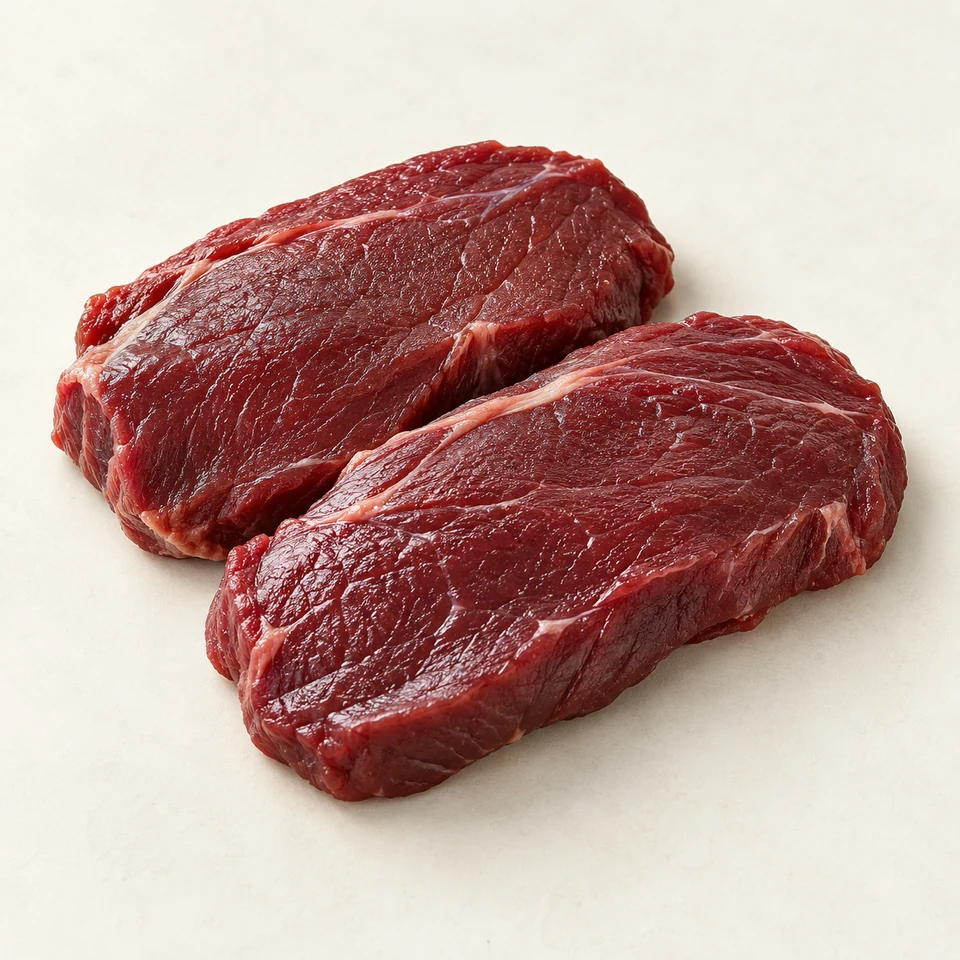
About Wild boar
Wild boar is meat from free-living wild swine rather than domestically raised pork. It may be roasted, braised, grilled, or cooked in hearty stews, and the term does not specify a particular species, region, or cut.
The meat is commonly described as firm and distinctly savoury, but appearance, texture, and flavour are affected by the animal’s age, sex, diet, activity, and handling. Leaner portions and tougher working muscles do not behave alike during cooking.
It may be sold as whole carcasses or cuts such as shoulder, leg, loin, and offal, appearing fresh, chilled, frozen, or preserved. Roasting, grilling, braising, and stewing alter tenderness, moisture, and surface colour, with preparation and cooking time depending on the cut.
- Ingredient type
- whole food
FOLLOW IT TO THE PLATE
Where will you meet it?
Explore the dishes that use this ingredient and their country and cuisine connections.
Explore linked dishesON A MENU OR LABEL
Find local names and written forms to help recognise this ingredient.
See local namesWhere wild boar appears
4 linked foodsFind foods to recognise by country and type. Recipes and products vary; these are recorded ingredient connections.
Showing 1–4 of 4
Main dishes


Noodle dishes
Ingredient connections awaiting review · Coverage is still growing, including packaged snacks.
Name examples awaiting language review. Confirm the specific food or product.
Local names for wild boar
Names and romanised forms to recognise on menus and labels.
sanglier
cinghiale
jabalí
Wild boar
wild boar
javali
Wildschwein
wild zwijn
senglar
mistreț
dzik
divočák
diviak
vaddisznó
yaban domuzu
αγριογούρουνο
agriogoúruno
дикий кабан
dikiy kaban
дикий кабан
dykyi kaban
дива свиня
diva svinya
дивља свиња
divlja svinja
divlja svinja
divji prašič
野猪
yězhū
イノシシ
inoshishi
멧돼지
metdwaeji
जंगली सूअर
jaṅgalī sūar
خنزير بري
khinzīr barrī
agriogoúruno
Romanised form
inoshishi
Romanised form
khinzīr barrī
Romanised form
dykyi kaban
Romanised form
metdwaeji
Romanised form
yězhū
Romanised form
jaṅgalī sūar
Romanised form
dikiy kaban
Romanised form
diva svinya
Romanised form
divlja svinja
Romanised form
Available names only. Languages may be spoken in other countries; a name alone does not identify every ingredient in a dish.
Name not available yet.
A name in English has not been added for wild boar. Choose another language to see its available names.
Wild boar nutrition & diet
Wild boar nutritional value
Game meat, boar, wild, raw
Per 100 g of the edible portion in the recorded food form.
- Calories
- 122kcal
- Protein
- 21.5g
- Carbs
- 0.0g
- Fat
- 3.3g
Reference values for the specific food form shown. Other varieties, brands and preparations can differ.
Portions & preparation
Match the reference to the edible muscle cut and preparation, since leanness, trimming, cooking method, and moisture loss vary. Roasting, braising, grilling, and stewing can involve different added fats, marinades, or sauces; bones, skin, and rendered fat should not be counted as the same portion.
Compare the right form: Use references for identified wild-boar meat, specifying cut and cooked or raw edible portion; sausages, cured products, and mixed dishes require separate matches.
Diet considerations
Wild boar is animal-derived meat. Compatibility changes when it is minced, cured, smoked, coated, stuffed, or combined with dairy, egg, cereal breadcrumbs, or animal-derived sauces. Preparation and portion determine the resulting carbohydrate pattern, while a plain meat portion differs from a stew or processed product.
AI-authored reading notes · Awaiting editorial review. Measured values, where available, have a separate source above.
Dietary compatibility
- VeganTypically incompatible
- VegetarianTypically incompatible
- PescatarianTypically incompatible
- KetoMay be compatible
- PaleoMay be compatible
- Low-carbMay be compatible
- HalalTypically incompatible
- KosherTypically incompatible
What these diet assessments mean
- Vegan · Typically incompatible
- The ingredient profile identifies an animal-derived food or derivative.
- Vegetarian · Typically incompatible
- The profile identifies animal flesh, seafood or a derivative excluded by a vegetarian diet.
- Pescatarian · Typically incompatible
- The profile identifies land-animal meat or a derivative, which is excluded by this pescatarian definition.
- Keto · May be compatible
- The plain form may fit a carbohydrate-restricted diet. Check the portion, added sugar, coatings and sauces against the nutrition values above.
- Paleo · May be compatible
- May fit a paleo pattern, depending on the cut or form, processing and added ingredients.
- Low-carb · May be compatible
- The plain form may fit a carbohydrate-restricted diet. Check the portion, added sugar, coatings and sauces against the nutrition values above.
- Halal · Typically incompatible
- This profile identifies pork or a pork-derived ingredient.
- Kosher · Typically incompatible
- This profile identifies pork or a pork-derived ingredient.
For the plain ingredient · Awaiting review. Diet compatibility is not allergy suitability or halal/kosher certification. Keto and low-carb depend on the portion.
AI-generated illustration for visual context. It does not identify a particular product or establish allergen content.
Sources & review
Nutrition reference: USDA FoodData Central — Game meat, boar, wild, raw ↗. Values are scaled from 100 g of the recorded edible form. Individual portions have no assumed fixed weight.
Expanded overview, name examples and nutrition notes are database drafts awaiting editorial review. Numeric nutrition values, where shown, have their own source and food-form reference.
The ingredient description and dish connections come from the draft catalogue and may change after review.
Last recorded verification: .