This Singapore guide addresses gluten as distinct from wheat and uses the recorded examples of wheat-containing sauces, noodles, flour, and dishes.
Editorial draft based on recorded food connections. Country-specific recipe connections await independent review; label research is identified separately below. This is not a list of suitable meals.
Understanding the food context
Understanding gluten in Singapore
This Singapore reference brings together recorded dishes and ingredients to help you prepare questions about gluten. It describes catalogue connections, not the suitability of a restaurant meal.
Examples to investigate include Ayam Sio, Bak Chor Mee, Bak Kut Teh, Beef Hor Fun, Curry Puff. Open a dish to see its recorded ingredients, then check the version being served: recipes and bought-in sauces can differ.
Gluten avoidance and wheat allergy are different requirements. Use the guide that matches your dietary needs, and explain those needs explicitly when ordering.
IngredientsFollow the components
Read the ingredient connections and check the product actually used.
DishesInvestigate the local version
Recorded dishes are examples to discuss, not suitability recommendations.
Eating outAsk about preparation
Get an answer for your particular order, including shared equipment.
Gluten and recorded wheat examples
The available records connect gluten concern with ingredients that may contain wheat, including dark soy sauce, some fermented soybean paste, fish cake, fried shallots, oyster sauce, vinegar, wheat flour, and wheat noodles.
See Gluten-free for the broader concern, while noting that gluten is not the same as wheat. The listed formulations vary, so product-specific questions remain important.
Ask the kitchen Which ingredients may contain gluten in this recipe?
Dish examples requiring checks
Curry Puff, Kaya Toast, Bak Chor Mee, Fish Ball Noodles, and Hokkien Prawn Mee have recorded wheat connections. Sauces may also matter in Ayam Sio, Bak Kut Teh, and Beef Hor Fun.
These records describe examples, not universal recipes. Check noodles, pastry, bread, binders, and sauces separately, because a dish can contain more than one possible gluten source.
Ask the kitchen Does this dish use wheat-based noodles, pastry, bread, or sauce?
These ingredients are linked to dishes recorded for Singapore and to this food concern. A link is a prompt to check the exact product, not a statement about every recipe.
Checking gluten in mixed formulations
Some fish cakes use wheat-based binders, some fried shallots use wheat coatings, and some oyster sauces use wheat-containing soy sauce or wheat-based thickeners. Generic vinegar is unspecified, while some vinegar is malt-based.
Ask about the exact product for Fermented Soybean Paste and other prepared ingredients. Do not assume fermentation removes gluten; ask what the formulation contains.
Ask the kitchen Does the product contain wheat, malt, or another gluten-containing cereal ingredient?
Wheat noodles are made from wheat as their defining grain ingredient.
Recorded examples, recipes vary
Dish notes for Singapore
Recorded recipes give you useful questions to ask. This is not a list of dishes declared suitable or unsuitable for every person.
Gluten-linked dish examples
Bak Chor Mee, Fish Ball Noodles, and Hokkien Prawn Mee use wheat noodles in the recorded examples. Curry Puff uses wheat-flour pastry, and Kaya Toast uses wheat bread.
Ayam Sio, Bak Kut Teh, and Beef Hor Fun may use soy sauces containing wheat. Ask about both the base and seasoning, rather than checking only the most visible component.
Ask the kitchen Which noodle, pastry, bread, binder, and sauce formulations are used?
Read the ingredient statement, not only a separate warning. SFA guidance requires specified hypersensitivity ingredients to be identified clearly on prepacked food; a Contains statement is optional.
Its listed groups include gluten-containing cereals, crustaceans, eggs, fish (including molluscs in this guidance), peanuts, soybeans, milk and tree nuts. Sulphites are covered at a total concentration of at least 10 mg/kg. Sesame, celery, mustard and lupin are not included in that table, so a summary of those groups cannot answer every concern.
This is a scoped packaged-food summary. Ask separately about a restaurant recipe and handling. Checked local-language restaurant requests have not yet been added here.
Keep the name connected to the actual product
Check the exact food and its form. For gluten, use the ingredient entries below to investigate recorded names. A name for a whole ingredient may not describe a powder, extract or mixed sauce. Confirm which product the kitchen uses.
Keep the original packet or a clear photograph available when asking for help. Ingredient recognition and a complete restaurant request are different tasks: a translated name alone does not explain the preparation you need.
Contact the restaurant before your visit and explain your requirements to someone who can check the kitchen. Ask about the full recipe, bought-in ingredients and shared preparation equipment. These are general planning steps, not a claim about local restaurant practices.
Ask about recipe ingredients
When ordering, explain that the concern is gluten and ask about wheat noodles, flour, bread, fish-cake binders, fried-shallot coatings, malt-based vinegar, and soy-based sauces.
Ask for the actual product information where possible. Gluten-free wording should not be assumed from appearance, and the recorded examples do not establish universal substitutions or recipes.
Ask the kitchen Could you check all cereal-based ingredients and prepared sauces?
Ask about preparation separately
After the recipe check, ask about shared noodle water, fryers, pans, boards, utensils, and surfaces used for wheat-containing foods. The records provide no general account of restaurant handling.
Preparation details are distinct from ingredients. Ask how this order is cooked and assembled, rather than assuming a recipe change answers equipment questions.
Ask the kitchen How are gluten-containing foods and equipment handled during preparation?
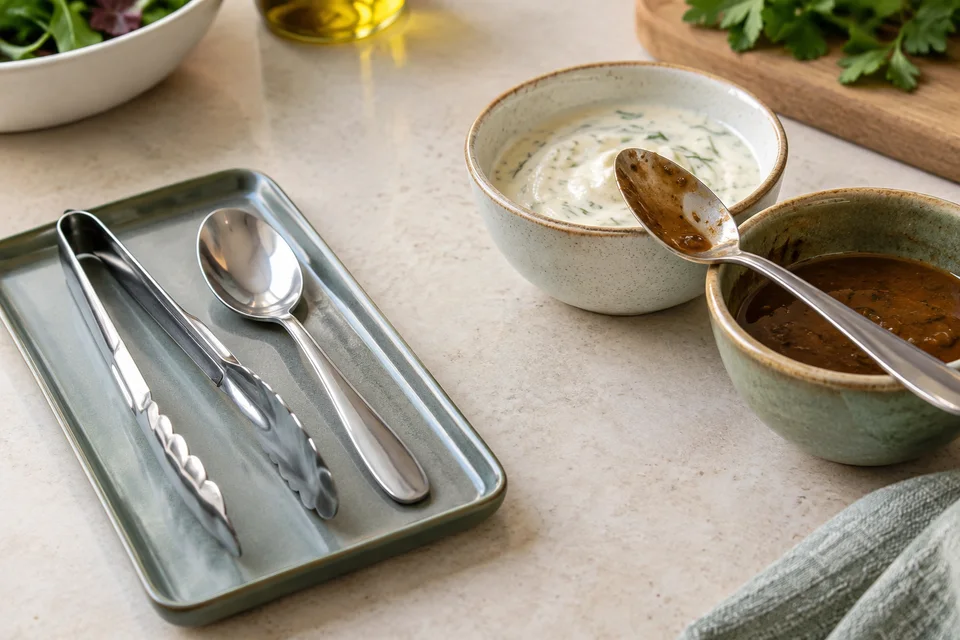
Illustrative preparation equipment; practices vary between kitchens.