
Apricot
Apricot is a sweet stone fruit eaten fresh or used in preserves, desserts, and beverages.
About Apricot
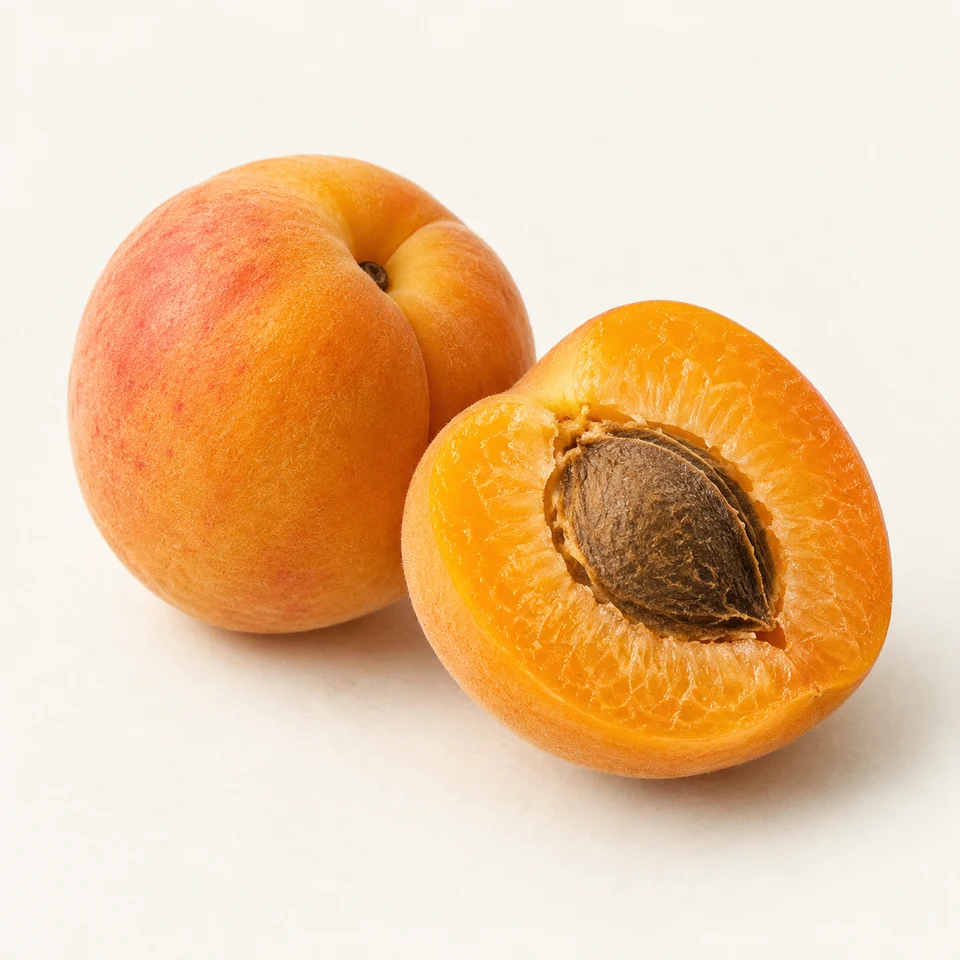
Apricot is the edible fruit of an apricot tree, a small stone fruit with soft flesh surrounding one hard pit. Fresh fruit is eaten after removing the pit or cut into salads, desserts, and savoury dishes. Apricots are also dried, canned, juiced, or cooked into jams, preserves, sauces, and desserts.
Its flavour is sweet and distinctly fruity, often with mild tartness. Ripe flesh is yielding, soft, and delicate, while less-ripe fruit is firmer and more acidic. Drying, canning, juicing, and cooking substantially alter the fruit’s moisture, texture, and flavour concentration.
The skin is usually yellow to orange and may have a red flush; flesh colour ranges within similar warm shades. Apricots are sold fresh, dried, canned, juiced, or prepared. Removing the pit makes the fruit ready to eat, while cooking softens it and preserves or drying make the texture denser and the flavour more concentrated.
- Ingredient type
- whole food
FOLLOW IT TO THE PLATE
Where will you meet it?
Explore the dishes that use this ingredient and their country and cuisine connections.
Explore linked dishesON A MENU OR LABEL
Find local names and written forms to help recognise this ingredient.
See local namesWhere apricot appears
2 linked foodsFind foods to recognise by country and type. Recipes and products vary; these are recorded ingredient connections.
Showing 1–2 of 2
Desserts

Ingredient connections awaiting review · Coverage is still growing, including packaged snacks.
Name examples awaiting language review. Confirm the specific food or product.
Local names for apricot
Names and romanised forms to recognise on menus and labels.
abricot
albaricoque
杏
xìng
あんず
anzu
Apricot
apricot
albercoc
albicocca
damasco
Aprikose
abrikoos
appelkoos
abrikot
albaricoque
caisă
kayısı
βερίκοκο
veríkoko
абрикос
abrikos
абрикос
abrykos
абрыкос
abrykos
morela
meruňka
marhuľa
sárgabarack
кайсия
kaysiya
кајсија
kajsija
кајсија
kajsija
marelica
kajsija
marelica
aprikos
abrikos
aprikos
aprikoosi
aprikoos
aprikoze
abrikosas
apríkósa
aibreog
bricyll
berquq
ծիրան
tsiran
გარგარი
gargari
مشمش
mishmish
زردآلو
zardâlu
מִשְׁמֵשׁ
mishmesh
खुबानी
khubānī
خوبانی
khūbānī
এপ্রিকট
eprikoṭ
பாதாமி
pātāmi
ಜರ್ದಾಳು
jardāḷu
जर्दाळू
jardāḷū
જરદાળુ
jaradāḷu
ਖੁਰਮਾਨੀ
khuramānī
खुर्पानी
khurpānī
杏
xìng
살구
salgu
mơ
aprikot
aprikot
แอปริคอต
ae-pri-khot
khurpānī
Romanised form
veríkoko
Romanised form
jardāḷu
Romanised form
anzu
Romanised form
Abricot au sirop (sans précision sur léger ou classique), appertisé, égoutté (aliment moyen)
Search alias · Not a confirmed translation
Abricot au sirop léger, appertisé, égoutté
Search alias · Not a confirmed translation
Abricot au sirop léger, appertisé, non égoutté
Search alias · Not a confirmed translation
Abricot au sirop, appertisé, égoutté
Search alias · Not a confirmed translation
Abricot au sirop, appertisé, non égoutté
Search alias · Not a confirmed translation
Abricot, dénoyauté, cru
Search alias · Not a confirmed translation
Abricot, dénoyauté, sec
Search alias · Not a confirmed translation
Abricot, dénoyauté, sec, moelleux (réhydraté à 35-45%)
Search alias · Not a confirmed translation
apricot (canned)
Search alias · Not a confirmed translation
Apricot, canned in pear juice
Search alias · Not a confirmed translation
Apricot, canned in pear juice, drained
Search alias · Not a confirmed translation
Apricot, Canned, With skin, Solid and liquid
Search alias · Not a confirmed translation
Apricot, dried
Search alias · Not a confirmed translation
Apricot, raw
Search alias · Not a confirmed translation
Apricot, with skin, raw
Search alias · Not a confirmed translation
Apricot(Salgu), Dried
Search alias · Not a confirmed translation
Apricot(Salgu), Raw
Search alias · Not a confirmed translation
Apricots, canned, extra heavy syrup pack, without skin, solids and liquids
Search alias · Not a confirmed translation
Apricots, canned, extra light syrup pack, with skin, solids and liquids (Includes foods for USDA's Food Distribution Program)
Search alias · Not a confirmed translation
Bergeron Apricot
Search alias · Not a confirmed translation
Canned apricots in light syrup not drained
Search alias · Not a confirmed translation
Canned apricots in syrup
Search alias · Not a confirmed translation
Fresh apricots
Search alias · Not a confirmed translation
Pitted dried apricots
Search alias · Not a confirmed translation
pātāmi
Romanised form
abrykos
Romanised form
kajsija
Romanised form
mishmish
Romanised form
abrykos
Romanised form
salgu
Romanised form
eprikoṭ
Romanised form
xìng
Romanised form
khubānī
Romanised form
khūbānī
Romanised form
abrikos
Romanised form
kaysiya
Romanised form
tsiran
Romanised form
mishmesh
Romanised form
zardâlu
Romanised form
kajsija
Romanised form
jaradāḷu
Romanised form
jardāḷū
Romanised form
gargari
Romanised form
ae-pri-khot
Romanised form
khuramānī
Romanised form
Available names only. Languages may be spoken in other countries; a name alone does not identify every ingredient in a dish.
Name not available yet.
A name in English has not been added for apricot. Choose another language to see its available names.
Apricot nutrition & diet
Apricot nutritional value
Apricot, raw
Per 100 g of the edible portion in the stated food form.
- Calories
- 39.7kcal
- Protein
- 0.2g
- Carbs
- 7.3g
- Fat
- 0.4g
Reference values apply to the named food form, not every preparation, variety or brand. © Food Standards Australia New Zealand. AFCD Release 3, food F000134. Available carbohydrate excludes sugar alcohols; energy converted from kJ to kcal (÷4.184). Australian data may not be appropriate for use in other countries. There are limitations associated with food composition databases. Food composition data used in the database or databases may represent an average of the nutrient content of a particular sample of foods and ingredients, determined at a particular time. The nutrient composition of foods and ingredients can vary substantially between batches and brands because of a number of factors, including changes in season, processing practices and ingredient source, and methods of calculation. Data licensed under the FSANZ Data User Licence Agreement, based on CC BY-SA 3.0 AU: https://www.foodstandards.gov.au/science-data/monitoringnutrients/afcd/datauserlicenceagreement.
Portions & preparation
Match the apricot variety and edible portion as fresh, peeled, pitted, cooked, canned, or dried. Preparation can change water content and serving density. Record whether the skin and flesh are eaten, and exclude the stone; mixed fruit dishes, syrups, pastry, and fillings require separate references.
Compare the right form: Match apricot variety and form as fresh, pitted, cooked, canned, or dried, with edible skin and flesh distinguished.
Diet considerations
Apricot is a plant-derived stone fruit. Plain fresh or cooked fruit differs from dried apricots, preserves, nectar, pastries, and canned fruit in syrup, which may add concentrated sweeteners, cereals, dairy, or coatings. Portion and water removal alter carbohydrate patterns, so the exact preparation should guide dietary interpretation.
AI-authored reading notes · Awaiting editorial review. Measured values, where available, have a separate source above.
Dietary compatibility
- VeganTypically compatible
- VegetarianTypically compatible
- PescatarianTypically compatible
- KetoDepends on the version
- PaleoTypically compatible
- Low-carbDepends on the version
- HalalNot established
- KosherNot established
What these diet assessments mean
- Vegan · Typically compatible
- The plain ingredient profile is plant, fungal or mineral based. Added ingredients in a prepared product need a separate check.
- Vegetarian · Typically compatible
- The plain ingredient profile is plant, fungal or mineral based. Added ingredients in a prepared product need a separate check.
- Pescatarian · Typically compatible
- The plain ingredient profile is plant, fungal or mineral based. Added ingredients in a prepared product need a separate check.
- Keto · Depends on the version
- Compatibility depends on the portion and preparation. A sourced carbohydrate amount for a defined serving is not available.
- Paleo · Typically compatible
- The plain form fits the conventional paleo food groups. Added ingredients and individual interpretations can differ.
- Low-carb · Depends on the version
- Compatibility depends on the portion and preparation. A sourced carbohydrate amount for a defined serving is not available.
- Halal · Not established
- Sourcing, processing and any applicable certification have not been verified. A food name alone does not establish halal status.
- Kosher · Not established
- Sourcing, processing and any applicable certification have not been verified. A food name alone does not establish kosher status.
For the plain ingredient · Awaiting review. Diet compatibility is not allergy suitability or halal/kosher certification. Keto and low-carb depend on the portion.
AI-generated illustration for visual context. It does not identify a particular product or establish allergen content.
Sources & review
Nutrition reference: Australian Food Composition Database, Release 3, 2025 — Apricot, raw ↗. Values are scaled from 100 g of the recorded edible form. Individual portions have no assumed fixed weight.
Expanded overview, name examples and nutrition notes are database drafts awaiting editorial review. Numeric nutrition values, where shown, have their own source and food-form reference.
The ingredient description and dish connections come from the draft catalogue and may change after review.
Last recorded verification: .