
Camel Milk
Camel milk is milk from camels consumed as a beverage and used in some dairy preparations.
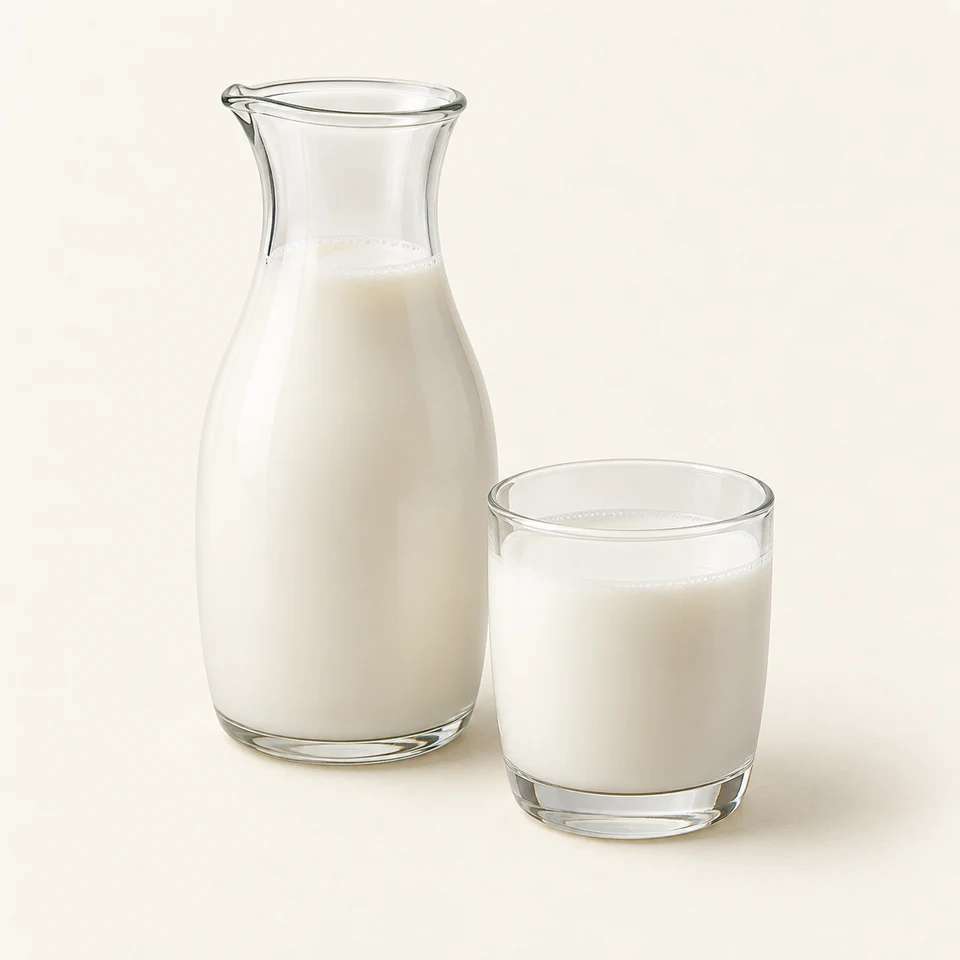
About Camel Milk
Camel milk is the milk produced by female camels and consumed as a liquid dairy food. It is used as a beverage and in some dairy preparations. It is an opaque white liquid whose flavour may be mildly sweet, salty, or distinctive depending on the camel, feed, handling, and freshness.
Its texture is generally fluid when fresh or pasteurized. Fermentation can make it thicker or give it a separated or cultured consistency, while drying and reconstitution produce a different form. These changes limit any single description of flavour or mouthfeel.
Camel milk may be sold fresh or pasteurized, and may also be fermented, dried into powder, or incorporated into other dairy preparations. It is served chilled or at ambient temperature, while processing changes its appearance, thickness, separation, and handling.
- Ingredient type
- whole food
FOLLOW IT TO THE PLATE
Where will you meet it?
Explore the dishes that use this ingredient and their country and cuisine connections.
Explore linked dishesON A MENU OR LABEL
Find local names and written forms to help recognise this ingredient.
See local namesWhere camel milk appears
4 linked foodsFind foods to recognise by country and type. Recipes and products vary; these are recorded ingredient connections.
Showing 1–4 of 4
Drinks

Other dishes
Ingredient connections awaiting review · Coverage is still growing, including packaged snacks.
Name examples awaiting language review. Confirm the specific food or product.
Local names for camel milk
Names and romanised forms to recognise on menus and labels.
camel milk
حليب الإبل
ḥalīb al-ibil
caano geel
maziwa ya ngamia
lait de chamelle
Kamelmilch
leche de camella
latte di cammella
deve sütü
شیر شتر
šīr-e šotor
ऊँट का दूध
ū̃ṭ kā dūdh
اونٹ کا دودھ
ūnṭ kā dūdh
түйе сүті
tüye sütı
骆驼奶
luòtuò nǎi
ラクダ乳
rakuda-nyū
낙타유
naktayu
rakuda-nyū
Romanised form
ḥalīb al-ibil
Romanised form
naktayu
Romanised form
tüye sütı
Romanised form
luòtuò nǎi
Romanised form
ū̃ṭ kā dūdh
Romanised form
ūnṭ kā dūdh
Romanised form
šīr-e šotor
Romanised form
Available names only. Languages may be spoken in other countries; a name alone does not identify every ingredient in a dish.
Name not available yet.
A name in English has not been added for camel milk. Choose another language to see its available names.
Camel Milk nutrition & diet
Camel Milk nutritional value
Reference: Milk, camel, fresh
Per 100 g of 100 g edible portion in the named official reference form.
- Calories
- 58kcal
- Protein
- 3.0g
- Carbs
- 2.4g
- Fat
- 4.0g
Official national food-composition reference. The displayed food form is part of the estimate; cultivar, recipe, brand, processing and preparation can change values.
Portions & preparation
Use the same camel-milk form and serving context: fresh, fermented, powdered, UHT, or otherwise processed. Water removal, fermentation, flavoring, and added sugar change the food being evaluated, while a dairy preparation may include other milks, cultures, thickeners, or sweeteners.
Compare the right form: Match the reference to camel milk as fresh, fermented, powdered, UHT, or another specified form, excluding or including additions consistently.
Diet considerations
Camel milk is animal-derived dairy. Plain milk differs from fermented drinks, powders, flavored beverages, and desserts that may contain cultures, sugar, cereal ingredients, thickeners, or other milk. Compatibility also depends on whether a product is pure camel milk or a blended dairy formulation.
AI-authored reading notes · Awaiting editorial review. Measured values, where available, have a separate source above.
Dietary compatibility
- VeganTypically incompatible
- VegetarianTypically compatible
- PescatarianTypically compatible
- KetoDepends on the version
- PaleoTypically incompatible
- Low-carbDepends on the version
- HalalNot established
- KosherNot established
What these diet assessments mean
- Vegan · Typically incompatible
- The ingredient profile identifies an animal-derived food or derivative.
- Vegetarian · Typically compatible
- Permitted by the lacto-ovo vegetarian pattern used here, in its plain form.
- Pescatarian · Typically compatible
- Permitted by the pescatarian pattern used here, in its plain form.
- Keto · Depends on the version
- Compatibility depends on the portion and preparation. A sourced carbohydrate amount for a defined serving is not available.
- Paleo · Typically incompatible
- This profile falls outside the conventional paleo pattern used here (grains and pseudograins, legumes, dairy or refined sugar).
- Low-carb · Depends on the version
- Compatibility depends on the portion and preparation. A sourced carbohydrate amount for a defined serving is not available.
- Halal · Not established
- Sourcing, processing and any applicable certification have not been verified. A food name alone does not establish halal status.
- Kosher · Not established
- Sourcing, processing and any applicable certification have not been verified. A food name alone does not establish kosher status.
For the plain ingredient · Awaiting review. Diet compatibility is not allergy suitability or halal/kosher certification. Keto and low-carb depend on the portion.
AI-generated illustration for visual context. It does not identify a particular product or establish allergen content.
Sources & review
Nutrition reference: FAO/INFOODS Food Composition Table for Western Africa (2019) — 10_018 ↗. Values are scaled from 100 g of the recorded edible form. Individual portions have no assumed fixed weight.
Expanded overview, name examples and nutrition notes are database drafts awaiting editorial review. Numeric nutrition values, where shown, have their own source and food-form reference.
The ingredient description and dish connections come from the draft catalogue and may change after review.
Last recorded verification: .