This Fiji guide explains recorded wheat connections in flour-based ingredients and named dishes, while separating recipe questions from preparation questions.
Editorial draft based on recorded food connections. Country-specific recipe connections await independent review; label research is identified separately below. This is not a list of suitable meals.
Understanding the food context
Understanding wheat in Fiji
This Fiji reference brings together recorded dishes and ingredients to help you prepare questions about wheat. It describes catalogue connections, not the suitability of a restaurant meal.
Examples to investigate include Bhajia, Dhal Puri, Farata, Gulgula, Jalebi. Open a dish to see its recorded ingredients, then check the version being served: recipes and bought-in sauces can differ.
IngredientsFollow the components
Read the ingredient connections and check the product actually used.
DishesInvestigate the local version
Recorded dishes are examples to discuss, not suitability recommendations.
Eating outAsk about preparation
Get an answer for your particular order, including shared equipment.
Wheat flour in recorded dishes
The records connect wheat flour with dhal puri, farata, gulgula, jalebi, kachori, puri, and wheat-based papad varieties. These are recorded examples, and preparation can vary between versions.
Bhajia is described as sometimes using wheat flour alongside or instead of chickpea flour. Ask which flour was used in the specific batter rather than relying on the dish name.
Ask the kitchen Which flour was used in this dish?
Wheat in fillings and doughs
Wheat flour is intrinsically made from wheat, while savoury fillings may use wheat-based crumbs, pastry, or thickener. A filling therefore needs its own question even when the outer dough is known.
The records concern wheat specifically, not every grain or gluten-related issue. Ask about flour, crumbs, pastry, and thickeners separately if the preparation includes several components.
Ask the kitchen Does any filling or thickener contain wheat?
These ingredients are linked to dishes recorded for Fiji and to this food concern. A link is a prompt to check the exact product, not a statement about every recipe.
Checking wheat flour and savoury filling
The wheat flour record directly identifies wheat. Ask whether it appears in the dough, batter, coating, crumbs, pastry, or thickener, including components made separately.
Savoury filling is conditional: some versions use wheat-based crumbs, pastry, or thickener. Ask for the ingredient used in this filling, not merely whether the dish is described as savoury.
Ask the kitchen Is wheat present in the dough, coating, or filling?
Recorded recipes give you useful questions to ask. This is not a list of dishes declared suitable or unsuitable for every person.
Platesafe has no recorded wheat connection for these dishes. This does not confirm they are free from wheat. Recipes and preparation vary—check with the food provider.
Kokoda is a Pacific raw-fish preparation associated especially with Fijian and Papua New Guinean cuisine, in which fish is cured or marinated in citrus juice and combined with coconut milk or cream, onion, tomato, and chilli.
Lovo is a traditional Fijian earth-oven cooking method and the communal feast prepared with it. Meat, fish, root crops, and vegetables are layered or wrapped in leaves, placed over heated stones in an underground pit, and cooked slowly before being shared.
Ripe vudi, a Fijian cooking banana or plantain, is cooked in coconut milk or coconut cream; documented versions may be stuffed with grated coconut and served as a sweet Fijian dish.
Labels & languages
A verified summary of Fiji’s label rules and local translations has not yet been added to this guide. Do not assume that the rules or terms used at home apply here.
Use the original packaging and full ingredient list when asking about a product. Ingredient pages contain recorded local names; check the language and the exact food form. A menu name alone does not describe the full recipe.
Keep the name connected to the actual product
Check the exact food and its form. For wheat, use the ingredient entries below to investigate recorded names. A name for a whole ingredient may not describe a powder, extract or mixed sauce. Confirm which product the kitchen uses.
Keep the original packet or a clear photograph available when asking for help. Ingredient recognition and a complete restaurant request are different tasks: a translated name alone does not explain the preparation you need.
Contact the restaurant before your visit and explain your requirements to someone who can check the kitchen. Ask about the full recipe, bought-in ingredients and shared preparation equipment. These are general planning steps, not a claim about local restaurant practices.
Ask about the recipe
Recipe checks should cover every flour-based component: dough, batter, pastry shell, papad, crumbs, and thickeners. Ask whether wheat was used in the named dish or a filling.
A wheat-free-sounding description is not enough when versions vary. Ask which flour was measured into the recipe, and whether a packaged component was added.
Ask the kitchen Can the cook identify every flour and crumb?
Check preparation separately
Preparation checks concern shared surfaces, utensils, pans, and fryers. Ask whether wheat-containing dough, batter, papad, or crumbs contacted the equipment used for this serving.
Even when the recipe is known, preparation is a separate question. Ask whether the same oil, board, tongs, or work area was used for wheat-containing foods.
Ask the kitchen What shared equipment contacted this order?
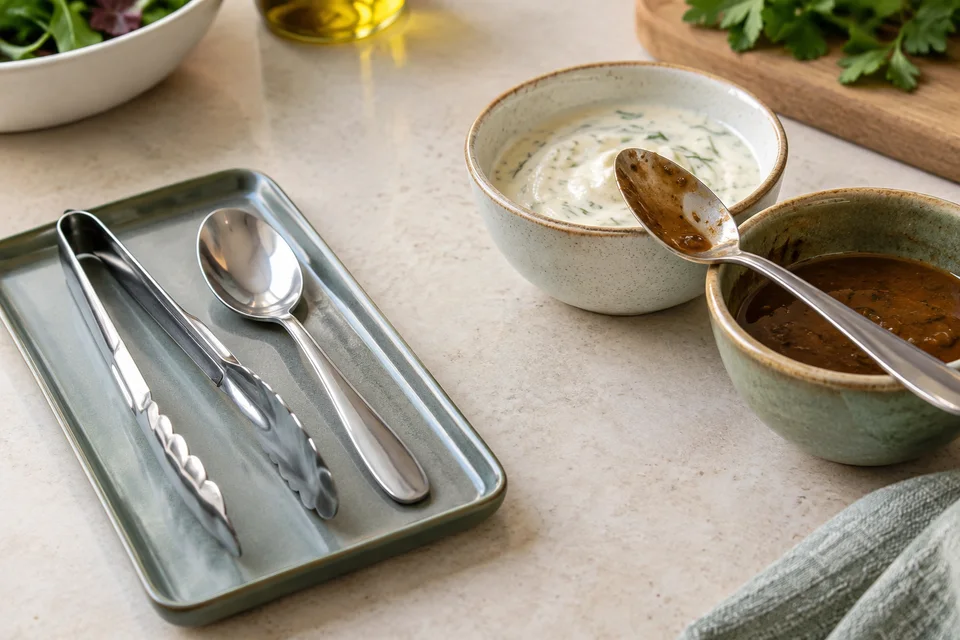
Illustrative preparation equipment; practices vary between kitchens.