Understand wheat in Japanese food, read the relevant label information and prepare specific questions before ordering.
Japan-specific editorial draft. Official sources checked 19 September 2026; independent review of the guide and catalogue connections is pending.
Understanding the local food culture
Wheat in Japan: what to expect
Wheat can enter through seasoning as well as noodles and batter. In Japan, a rice-based main ingredient does not tell you everything about its sauce, coating or stock. Ask about the full preparation.
Everyday foodFollow the complete recipe
Check the seasoning, filling and finishing ingredients as well as the main food.
LabelsKnow what the list covers
Japan uses mandatory and recommended declarations for specified foods; the groups differ from other countries.
Eating outAsk before the meal is made
A product label and a restaurant conversation answer different questions.
Rice on the plate does not settle the wheat question
Soy sauce deserves an explicit question. MAFF describes grains among the raw materials used for soy sauce. Check the actual bottle: changing or omitting a table condiment cannot undo seasoning already added in the kitchen.
Wheat allergy and gluten avoidance are different requirements. Use the wheat declaration to investigate wheat, and explain your own needs rather than treating any gluten-related description as a complete answer.
Recognise the ingredient, then follow it into the complete recipe.
Awareness is a conversation with this kitchen
Ask what the restaurant can actually check. The Consumer Affairs Agency provides separate guidance for restaurants and ready-to-eat food. Do not assume that a packaged-food label rule describes how every restaurant provides information.
Explain the ingredient and ask a member of staff who can speak with the kitchen. A friendly response is useful, but it still needs a concrete answer about the recipe and preparation. This guide does not assign one level of allergy awareness to an entire country.
Contact a restaurant while there is time to investigate. Ask about the intended order, including its sides and sauces. Find out whether components are made in advance and whether a requested change is possible.
Keep an alternative plan if the recipe or preparation cannot be established. The dish examples in this guide are starting points for questions, not a list of meals declared suitable for you.
Soy sauce deserves an explicit question. MAFF describes grains among the raw materials used for soy sauce. Check the actual bottle: changing or omitting a table condiment cannot undo seasoning already added in the kitchen.
Wheat allergy and gluten avoidance are different requirements. Use the wheat declaration to investigate wheat, and explain your own needs rather than treating any gluten-related description as a complete answer.
Read the components, not just the name
Keep the original packaging in the conversation. Prepared sauces, powders and fillings can have several ingredients. Ask staff to check the product they use today, including changes of supplier or recipe.
Open the ingredient entries below for background and recorded names. A catalogue connection does not establish what every restaurant or brand uses.
Yakisoba wheat noodles are intrinsically made with wheat flour.
Turn a dish name into a useful question
Dishes to investigate for wheat
A familiar dish name can cover several recipes. Use these recorded Japan connections to choose what to ask about, then confirm the version at the restaurant. An ingredient might be in a seasoning or filling rather than visible on the plate.
Wheat allergy and gluten avoidance are different requirements. Use the wheat declaration to investigate wheat, and explain your own needs rather than treating any gluten-related description as a complete answer.
Before choosing from the menu
Does the recipe contain wheat in the flour, noodles, batter or seasoning, including the soy sauce used during preparation?
Ask whether the change happens before cooking. Removing a topping and changing a premade mixture are different requests. Check accompaniments, dipping sauces and the equipment used for the order.
Use Japan’s list, not the list you know from home. The packaged-food rules identify specified foods, with mandatory and recommended declarations. Read the actual ingredient information rather than relying on a translated menu name.
This concern has mandatory declarations for the specified foods described below.
Keep the label with the product
The CAA handbook shows declarations attached to individual ingredients and, in some cases, grouped together. Keep the outer packaging of multipacks: an individual inner wrapper may not repeat all of its information.
These words help identify ingredients; they are not a complete allergy card. They do not communicate severity, every food you avoid or the preparation you require. Use a checked explanation of your needs for a restaurant conversation.
Knowing the ingredients is the start of the discussion. Ask how the order is made and whether the kitchen can meet your particular requirements. A dish description alone cannot answer this.
Does the recipe contain wheat in the flour, noodles, batter or seasoning, including the soy sauce used during preparation?
Check the base before the finishing touches
Wheat allergy and gluten avoidance are different requirements. Use the wheat declaration to investigate wheat, and explain your own needs rather than treating any gluten-related description as a complete answer.
Find out whether stock, batter, filling or sauce has already been mixed. If it cannot be checked or changed, omitting a last-minute garnish does not resolve that question.
Ask the kitchen Does the recipe contain wheat in the flour, noodles, batter or seasoning, including the soy sauce used during preparation?
Ask about equipment and serving
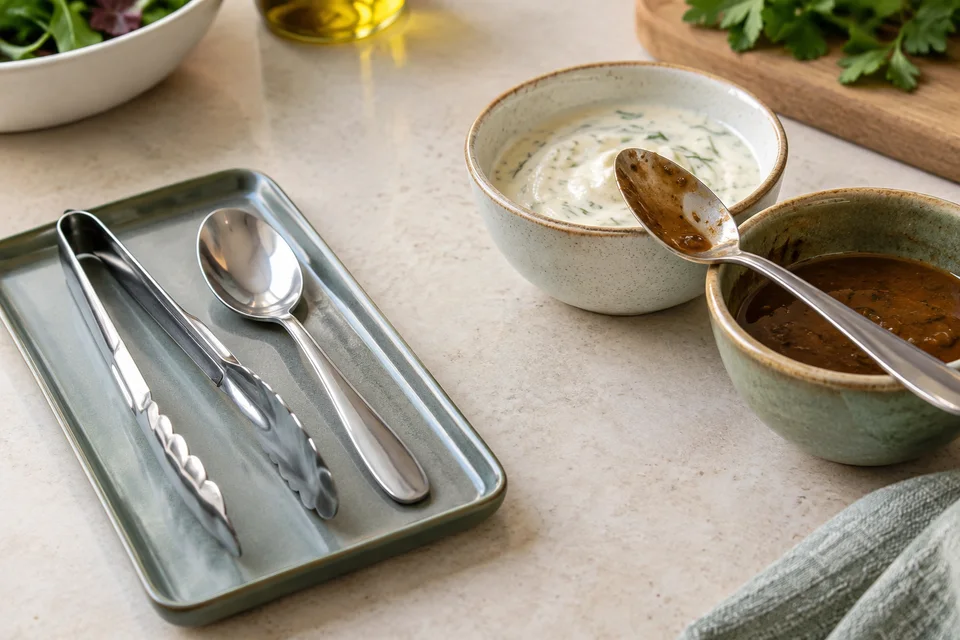
Discuss the equipment used for this order. Shared utensils, preparation areas and serving tools need a specific answer from the kitchen. Ask about cleaning and handling rather than assuming a separate plate means separate preparation.
Describe the food you avoid explicitly. A standard checklist may cover a different set of ingredients from your own requirements.
Ask the kitchen Can the kitchen explain how this order will be prepared and served, including any shared equipment?
Illustrative preparation scenario; it does not describe every restaurant.
Confirm the order when it arrives
Make sure the answer and the meal refer to the same order. Confirm any agreed changes with staff and check that sauces or sides have not been added automatically.
If the kitchen cannot establish an ingredient or preparation detail, retain that uncertainty rather than treating a missing warning as reassurance.