
Barley Flour
Barley flour is flour milled from barley and is used in breads, baked goods, and thickened preparations.
About Barley Flour
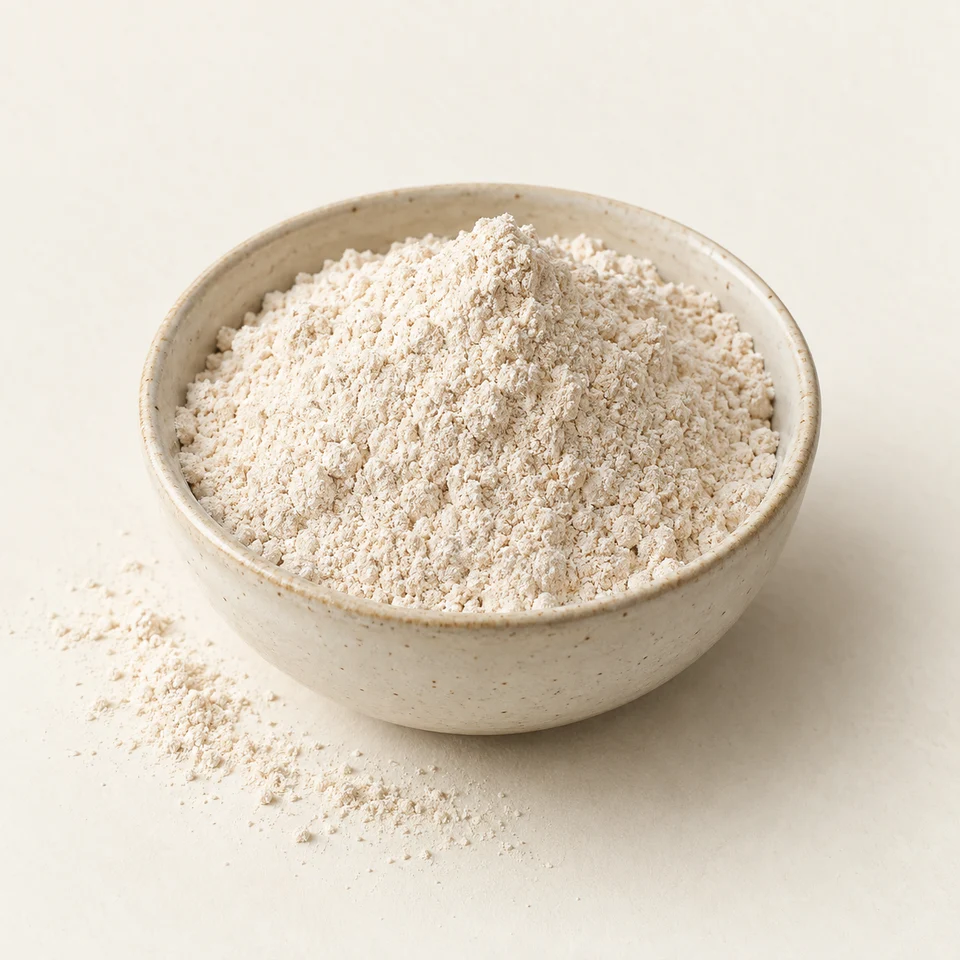
Barley flour is a powder milled from barley kernels, with a colour ranging from pale cream to tan depending on the kernel and milling process. It has a mild cereal and nutty flavour and usually produces a denser, less elastic dough than wheat flour when used in baked goods.
It is used in breads, biscuits, cakes, pancakes, porridges, and thickened soups or sauces. The flour may be milled from whole or more highly refined barley, and it can be blended with other flours.
Used alone, barley flour contributes a tender or compact crumb to preparations. Milling, sifting, and the source kernel can change its colour, coarseness, water absorption, and resulting texture.
- Ingredient type
- flour
FOLLOW IT TO THE PLATE
Where will you meet it?
Explore the dishes that use this ingredient and their country and cuisine connections.
Explore linked dishesON A MENU OR LABEL
Find local names and written forms to help recognise this ingredient.
See local namesWhere barley flour appears
13 linked foodsFind foods to recognise by country and type. Recipes and products vary; these are recorded ingredient connections.
Showing 1–12 of 13
Main dishes

Snacks

Breads
Drinks
Breakfasts


Ingredient connections awaiting review · Coverage is still growing, including packaged snacks.
Name examples awaiting language review. Confirm the specific food or product.
Local names for barley flour
Names and romanised forms to recognise on menus and labels.
barley flour
harina de cebada
farine d’orge
Gerstenmehl
farina d’orzo
farinha de cevada
gerstemeel
mąka jęczmienna
ječná mouka
jačmenná múka
ячменная мука
yachmennaya muka
ячмінне борошно
iachminne boroshno
ечемично брашно
echemichno brashno
arpa unu
آرد جو
ārd-e jow
जौ का आटा
jau kā āṭā
যবের আটা
yôber āṭā
பார்லி மாவு
pārli māvu
大麦粉
dàmài fěn
大麦粉
ōmugi-ko
보리 가루
bori garu
bột lúa mạch
tepung jelai
tepung barli
αλεύρι κριθαριού
alévri kritharioú
alévri kritharioú
Romanised form
ōmugi-ko
Romanised form
Barley flour or meal
Search alias · Not a confirmed translation
dextrinated barley flour
Search alias · Not a confirmed translation
pārli māvu
Romanised form
iachminne boroshno
Romanised form
bori garu
Romanised form
yôber āṭā
Romanised form
dàmài fěn
Romanised form
jau kā āṭā
Romanised form
yachmennaya muka
Romanised form
echemichno brashno
Romanised form
ārd-e jow
Romanised form
Available names only. Languages may be spoken in other countries; a name alone does not identify every ingredient in a dish.
Name not available yet.
A name in English has not been added for barley flour. Choose another language to see its available names.
Barley Flour nutrition & diet
Barley Flour nutritional value
Barley flour or meal
Per 100 g of the edible portion in the recorded food form.
- Calories
- 345kcal
- Protein
- 10.5g
- Carbs
- 74.5g
- Fat
- 1.6g
Reference values for the specific food form shown. Other varieties, brands and preparations can differ.
Portions & preparation
Use the stated barley flour extraction and whether it is whole-grain, sifted, roasted, or blended. Reference the flour amount in the dough or thickener separately from water, leaveners, sweeteners, fats, eggs, and other flours, since baking changes the final edible portion.
Compare the right form: Match references to barley flour with its milling or extraction description and to the dry flour or finished baked product, not interchangeably.
Diet considerations
Barley flour is plant-derived cereal flour. Its compatibility changes in breads and baked goods containing wheat or other cereals, dairy, eggs, honey, animal fats, or coatings. Because flour is concentrated in doughs and batters, serving size and added sweeteners shape the carbohydrate pattern.
AI-authored reading notes · Awaiting editorial review. Measured values, where available, have a separate source above.
Dietary compatibility
- VeganTypically compatible
- VegetarianTypically compatible
- PescatarianTypically compatible
- KetoDepends on the version
- PaleoTypically incompatible
- Low-carbDepends on the version
- HalalNot established
- KosherNot established
What these diet assessments mean
- Vegan · Typically compatible
- The plain ingredient profile is plant, fungal or mineral based. Added ingredients in a prepared product need a separate check.
- Vegetarian · Typically compatible
- The plain ingredient profile is plant, fungal or mineral based. Added ingredients in a prepared product need a separate check.
- Pescatarian · Typically compatible
- The plain ingredient profile is plant, fungal or mineral based. Added ingredients in a prepared product need a separate check.
- Keto · Depends on the version
- Compatibility depends on the portion and preparation. A sourced carbohydrate amount for a defined serving is not available.
- Paleo · Typically incompatible
- This profile falls outside the conventional paleo pattern used here (grains and pseudograins, legumes, dairy or refined sugar).
- Low-carb · Depends on the version
- Compatibility depends on the portion and preparation. A sourced carbohydrate amount for a defined serving is not available.
- Halal · Not established
- Sourcing, processing and any applicable certification have not been verified. A food name alone does not establish halal status.
- Kosher · Not established
- Sourcing, processing and any applicable certification have not been verified. A food name alone does not establish kosher status.
For the plain ingredient · Awaiting review. Diet compatibility is not allergy suitability or halal/kosher certification. Keto and low-carb depend on the portion.
AI-generated illustration for visual context. It does not identify a particular product or establish allergen content.
Sources & review
Nutrition reference: USDA FoodData Central — Barley flour or meal ↗. Values are scaled from 100 g of the recorded edible form. Individual portions have no assumed fixed weight.
Expanded overview, name examples and nutrition notes are database drafts awaiting editorial review. Numeric nutrition values, where shown, have their own source and food-form reference.
The ingredient description and dish connections come from the draft catalogue and may change after review.
Last recorded verification: .