
Common bean
The common bean is a legume eaten fresh or dried and used in soups, stews, salads, and bean dishes.
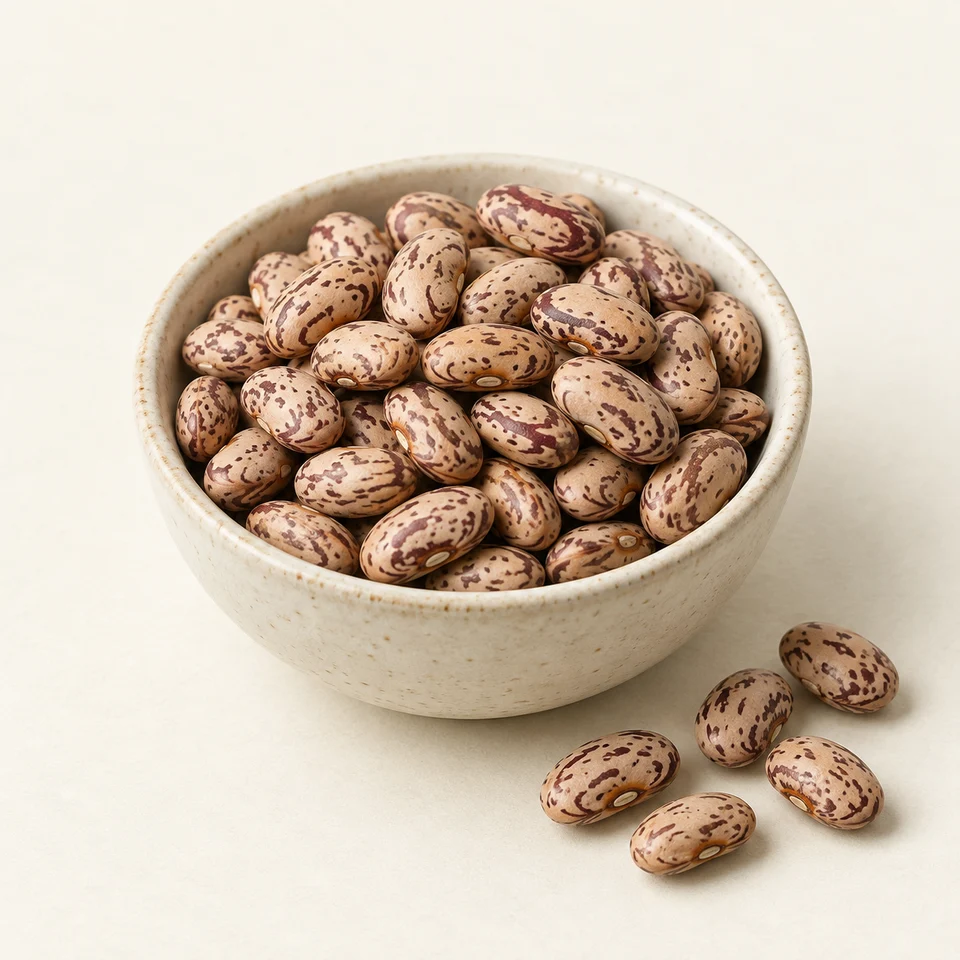
About Common bean
Common bean refers to the bean plant and its edible seeds, considered as a singular ingredient identity rather than a particular named cultivar. Depending on harvest stage and market form, it may be encountered as fresh immature beans or mature dried seeds used in soups, stews, salads, purées, and other bean dishes.
The seeds vary widely in size, shape, and colour, including white, cream, red, brown, black, and mottled forms. Fresh beans can be cooked as a vegetable, while dried beans become tender and substantial after soaking when appropriate, then boiling or simmering.
This page-level identity does not specify one variety, colour, maturity stage, or preservation method. Accordingly, the finished texture may range from relatively firm and separate in fresh or less-cooked forms to soft and creamy in thoroughly cooked dried seeds.
- Ingredient type
- whole food
FOLLOW IT TO THE PLATE
Where will you meet it?
Explore the dishes that use this ingredient and their country and cuisine connections.
Explore linked dishesON A MENU OR LABEL
Find local names and written forms to help recognise this ingredient.
See local namesWhere common bean appears
7 linked foodsFind foods to recognise by country and type. Recipes and products vary; these are recorded ingredient connections.
Showing 1–7 of 7
Main dishes

Sides


Rice dishes

Street food
Ingredient connections awaiting review · Coverage is still growing, including packaged snacks.
Name examples awaiting language review. Confirm the specific food or product.
Local names for common bean
Names and romanised forms to recognise on menus and labels.
common bean
frijol común
haricot commun
feijão-comum
fagiolo comune
Gartenbohne
gewone boon
gewone boon
mongeta comuna
feixón común
babarrun arrunta
fasole comună
fasola zwykła
fazole obecná
fazuľa obyčajná
közönséges bab
obični grah
обични пасуљ
obični pasulj
obični grah
navadni fižol
обикновен фасул
obiknoven fasul
фасоль обыкновенная
fasol obyknovennaya
квасоля звичайна
kvasolia zvychaina
κοινό φασόλι
koinó fasóli
adi fasulye
ჩვეულებრივი ლობიო
chveulebrivi lobio
սովորական լոբի
sovorakan lobi
الفاصوليا الشائعة
al-fāṣūliyā al-shāʾiʿa
لوبیای معمولی
lubiyā-ye ma'muli
साधारण सेम
sādhāraṇ sem
সাধারণ শিম
sādhāraṇ shim
सामान्य घेवडा
sāmānya ghevaḍā
సాధారణ చిక్కుడు
sādhāraṇa cikkuḍu
பொதுவான பீன்ஸ்
potuvāṉ pīṉs
ಸಾಮಾನ್ಯ ಹುರುಳಿ
sāmānya huruḷi
普通菜豆
pǔtōng càidòu
インゲンマメ
ingenmame
강낭콩
gangnangkong
đậu cô ve
kacang buncis
kacang buncis
maharagwe ya kawaida
koinó fasóli
Romanised form
sāmānya huruḷi
Romanised form
ingenmame
Romanised form
common bean pod
Search alias · Not a confirmed translation
Common bean sprouts
Search alias · Not a confirmed translation
potuvāṉ pīṉs
Romanised form
al-fāṣūliyā al-shāʾiʿa
Romanised form
kvasolia zvychaina
Romanised form
gangnangkong
Romanised form
sādhāraṇ shim
Romanised form
pǔtōng càidòu
Romanised form
sādhāraṇ sem
Romanised form
fasol obyknovennaya
Romanised form
obiknoven fasul
Romanised form
sovorakan lobi
Romanised form
gewone boon
lubiyā-ye ma'muli
Romanised form
obični pasulj
Romanised form
sāmānya ghevaḍā
Romanised form
chveulebrivi lobio
Romanised form
sādhāraṇa cikkuḍu
Romanised form
Available names only. Languages may be spoken in other countries; a name alone does not identify every ingredient in a dish.
Name not available yet.
A name in English has not been added for common bean. Choose another language to see its available names.
Common bean nutrition & diet
Common bean nutritional value
Reference: Common bean, Black, raw
Per 100 g of 100 g edible portion in the named official reference form.
- Calories
- 86.5kcal
- Protein
- 21.5g
- Carbs
- 64.9g
- Fat
- 1.9g
Official national food-composition reference. The displayed food form is part of the estimate; cultivar, recipe, brand, processing and preparation can change values.
Portions & preparation
Clarify whether “common bean” means a fresh pod, fresh seed, or dried mature seed, and identify the variety where relevant. Match raw, boiled, canned, sprouted, mashed, or seasoned form; draining, soaking, cooking liquid, oil, salt, and recipe additions affect comparison.
Compare the right form: Establish fresh pod, fresh seed, or dried mature common bean, then match variety, cooking state, draining, and edible portion.
Diet considerations
The common bean is plant-derived, but its fresh and dried forms behave differently in meals. Meat, dairy, or stock additions change compatibility, while coatings and cereal-based bean dishes add further ingredients. Portion size and whether it replaces or accompanies grains influence the meal’s carbohydrate pattern.
AI-authored reading notes · Awaiting editorial review. Measured values, where available, have a separate source above.
Dietary compatibility
- VeganTypically compatible
- VegetarianTypically compatible
- PescatarianTypically compatible
- KetoDepends on the version
- PaleoTypically incompatible
- Low-carbDepends on the version
- HalalNot established
- KosherNot established
What these diet assessments mean
- Vegan · Typically compatible
- The plain ingredient profile is plant, fungal or mineral based. Added ingredients in a prepared product need a separate check.
- Vegetarian · Typically compatible
- The plain ingredient profile is plant, fungal or mineral based. Added ingredients in a prepared product need a separate check.
- Pescatarian · Typically compatible
- The plain ingredient profile is plant, fungal or mineral based. Added ingredients in a prepared product need a separate check.
- Keto · Depends on the version
- Compatibility depends on the portion and preparation. A sourced carbohydrate amount for a defined serving is not available.
- Paleo · Typically incompatible
- This profile falls outside the conventional paleo pattern used here (grains and pseudograins, legumes, dairy or refined sugar).
- Low-carb · Depends on the version
- Compatibility depends on the portion and preparation. A sourced carbohydrate amount for a defined serving is not available.
- Halal · Not established
- Sourcing, processing and any applicable certification have not been verified. A food name alone does not establish halal status.
- Kosher · Not established
- Sourcing, processing and any applicable certification have not been verified. A food name alone does not establish kosher status.
For the plain ingredient · Awaiting review. Diet compatibility is not allergy suitability or halal/kosher certification. Keto and low-carb depend on the portion.
AI-generated illustration for visual context. It does not identify a particular product or establish allergen content.
Sources & review
Nutrition reference: FAO/INFOODS Food Composition Database for Biodiversity, version 4.0 — 0301103 ↗. Values are scaled from 100 g of the recorded edible form. Individual portions have no assumed fixed weight.
Expanded overview, name examples and nutrition notes are database drafts awaiting editorial review. Numeric nutrition values, where shown, have their own source and food-form reference.
The ingredient description and dish connections come from the draft catalogue and may change after review.
Last recorded verification: .