
Paprika
Paprika is a ground dried pepper seasoning used for color and mild, sweet, or smoky flavor.
About Paprika
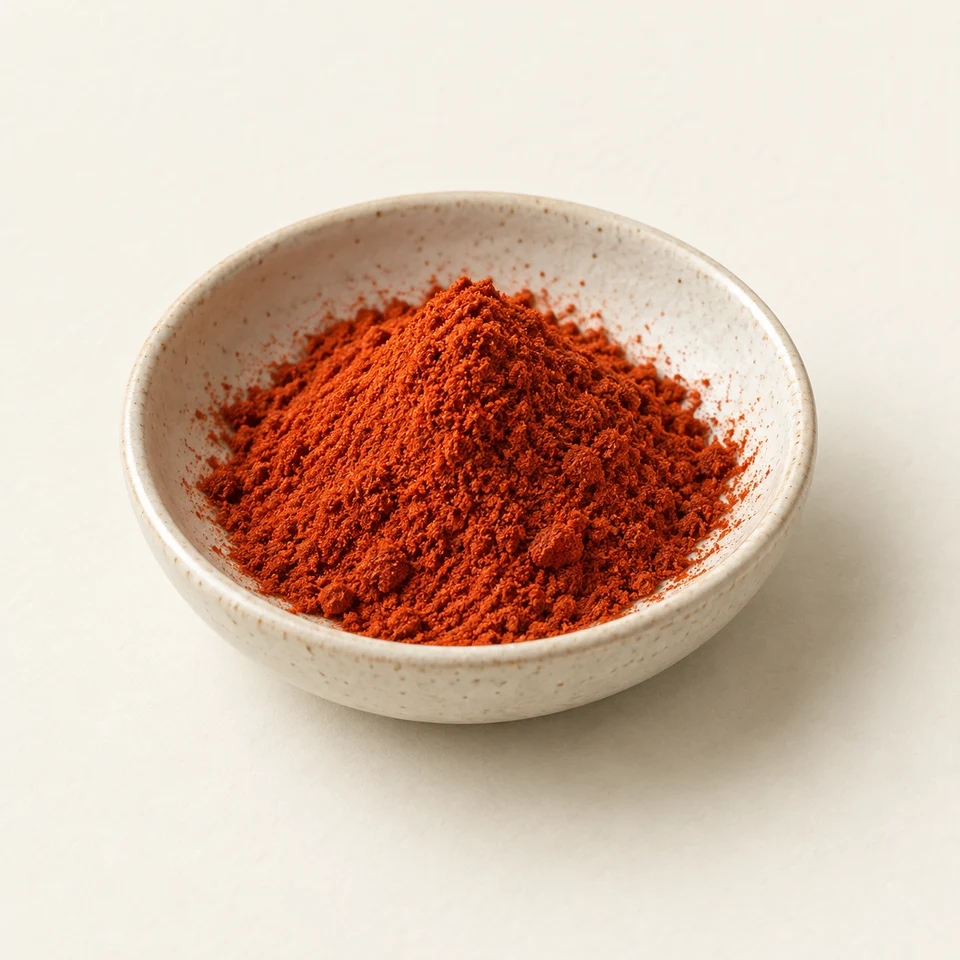
Paprika is a seasoning made by grinding dried peppers selected for mild, sweet, pungent, or smoky flavour. It is usually a fine powder ranging from bright red to deep orange-red, although colour does not reliably indicate heat. Different products contain varying proportions of pepper flesh, skins, seeds, and placental material.
It is used to colour and season sauces, soups, stews, rice, vegetables, eggs, meat, and spice blends. Sweet, hot, smoked, and regional styles differ substantially: sweet paprika is usually mild, hot paprika brings more heat, and smoked paprika adds a wood-smoke character. These forms are not interchangeable in every recipe.
Ground dried paprika has a dry, powdery texture before mixing and disperses readily into liquids, fats, batters, and other foods. It may be stirred into a dish, bloomed in oil, used to coat ingredients, or sprinkled as a finish. Cooking distributes its colour and flavour and can deepen its toasted notes.
- Ingredient type
- seasoning
Forms & related ingredients
FOLLOW IT TO THE PLATE
Where will you meet it?
Explore the dishes that use this ingredient and their country and cuisine connections.
Explore linked dishesON A MENU OR LABEL
Find local names and written forms to help recognise this ingredient.
See local namesWhere paprika appears
92 linked foodsFind foods to recognise by country and type. Recipes and products vary; these are recorded ingredient connections.
Showing 25–36 of 92
Main dishes


Ingredient connections awaiting review · Coverage is still growing, including packaged snacks.
Name examples awaiting language review. Confirm the specific food or product.
Local names for paprika
Names and romanised forms to recognise on menus and labels.
Paprika
Paprika
Pimentón
paprika
paprika
pimentón
paprika
Paprika
paprikapoeder
paprika
páprica
pebre vermell
boia
papryka
paprika
paprika
paprika
paprika
paprika
паприка
paprika
червен пипер
cherven piper
паприка
paprika
паприка
papryka
πάπρικα
páprika
paprika
بابريكا
bābrīkā
פפריקה
paprika
پاپریکا
pāprīkā
páprika
Romanised form
paprikos milteliai
papurika paudā
Romanised form
パプリカパウダー
Paprika, dry powder
Search alias · Not a confirmed translation
bābrīkā
Romanised form
papryka
Romanised form
papeurika garu
Romanised form
파프리카 가루
papryka w proszku
mljevena paprika
hóng paprika fěn
Romanised form
红 paprika 粉
paparika paudar
Romanised form
पपरिका पाउडर
toz biber
paprika
Romanised form
paprikapulber
cherven piper
Romanised form
paprika
Romanised form
паприка
paprikapulver
paprikapulver
paprikas pulveris
pāprīkā
Romanised form
mlevena paprika
Romanised form
млевена паприка
mletá paprika
mletá paprika
paprikajauhe
paprikapulver
mleta paprika
Paprika Powder
Search alias · Not a confirmed translation
Available names only. Languages may be spoken in other countries; a name alone does not identify every ingredient in a dish.
Name not available yet.
A name in English has not been added for paprika. Choose another language to see its available names.
Paprika nutrition & diet
Paprika nutritional value
Spices, paprika
Per 100 g of the edible portion in the recorded food form.
- Calories
- 282kcal
- Protein
- 14.1g
- Carbs
- 54.0g
- Fat
- 12.9g
Reference values for the specific food form shown. Other varieties, brands and preparations can differ.
Portions & preparation
Paprika powder should be evaluated according to whether it is sweet, hot, smoked, or a mixed seasoning. Measure the powder added rather than assuming the dish contains a full serving of spice. Oil infusions, rubs, sauces, and packaged blends may contribute additional ingredients requiring separate review.
Compare the right form: Match references to plain ground dried paprika powder, with pepper type and smoked, sweet, hot, or blended status established.
Diet considerations
Plain paprika powder is plant-derived, but packaged paprika seasonings may include salt, cereal-based carriers, sugar, dairy ingredients, or other additives. Compatibility changes when the powder is used in coatings, meat preparations, sauces, or blends containing animal ingredients. The portion is usually recipe-dependent and should be assessed within the finished dish.
AI-authored reading notes · Awaiting editorial review. Measured values, where available, have a separate source above.
Dietary compatibility
- VeganTypically compatible
- VegetarianTypically compatible
- PescatarianTypically compatible
- KetoNot established
- PaleoMay be compatible
- Low-carbNot established
- HalalNot established
- KosherNot established
What these diet assessments mean
- Vegan · Typically compatible
- The plain ingredient profile is plant, fungal or mineral based. Added ingredients in a prepared product need a separate check.
- Vegetarian · Typically compatible
- The plain ingredient profile is plant, fungal or mineral based. Added ingredients in a prepared product need a separate check.
- Pescatarian · Typically compatible
- The plain ingredient profile is plant, fungal or mineral based. Added ingredients in a prepared product need a separate check.
- Keto · Not established
- A defined serving and sourced carbohydrate data are needed before assessing this dietary pattern.
- Paleo · May be compatible
- May fit a paleo pattern, depending on the cut or form, processing and added ingredients.
- Low-carb · Not established
- A defined serving and sourced carbohydrate data are needed before assessing this dietary pattern.
- Halal · Not established
- Sourcing, processing and any applicable certification have not been verified. A food name alone does not establish halal status.
- Kosher · Not established
- Sourcing, processing and any applicable certification have not been verified. A food name alone does not establish kosher status.
For the plain ingredient · Awaiting review. Diet compatibility is not allergy suitability or halal/kosher certification. Keto and low-carb depend on the portion.
AI-generated illustration for visual context. It does not identify a particular product or establish allergen content.
Sources & review
Nutrition reference: USDA FoodData Central — Spices, paprika ↗. Values are scaled from 100 g of the recorded edible form. Individual portions have no assumed fixed weight.
Expanded overview, name examples and nutrition notes are database drafts awaiting editorial review. Numeric nutrition values, where shown, have their own source and food-form reference.
The ingredient description and dish connections come from the draft catalogue and may change after review.
Last recorded verification: .