
Red Wine
Red wine is a fermented grape beverage commonly used for drinking, sauces, marinades, and braises.
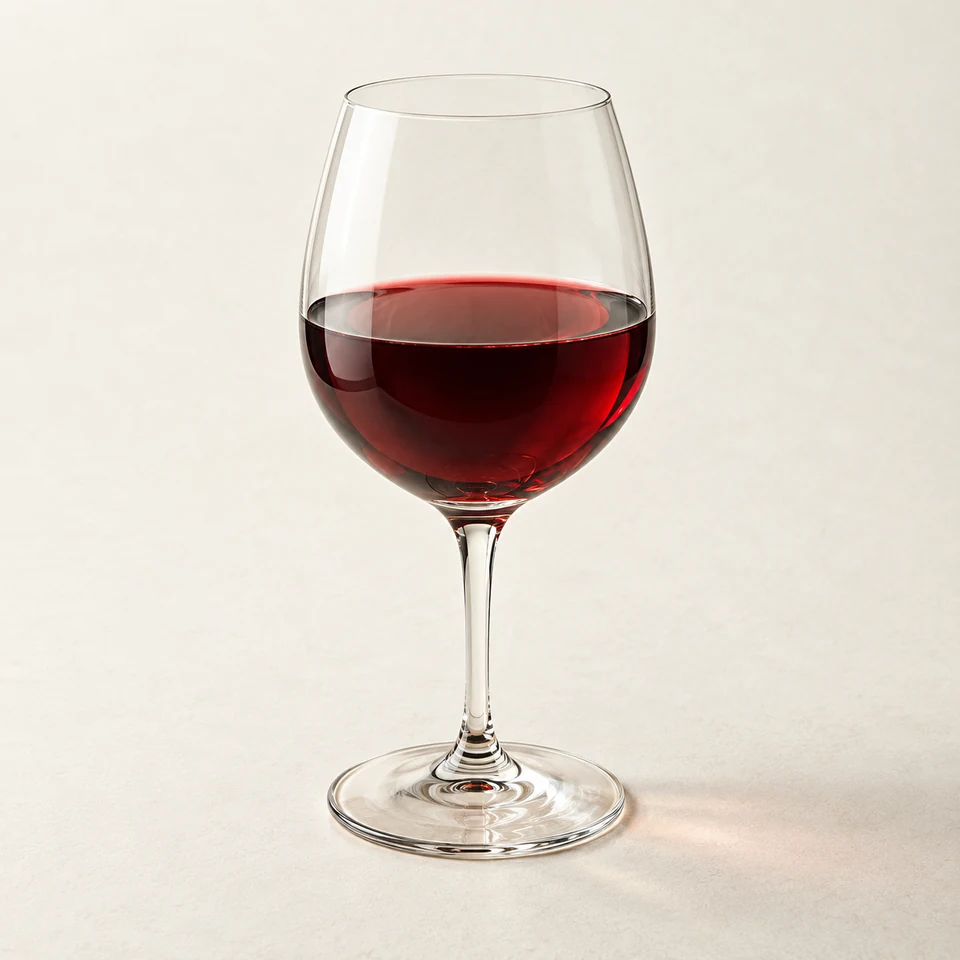
About Red Wine
Red wine is a fermented beverage made from dark-colored grapes, with its red, purple, or garnet color developed through contact with grape skins during production. It is consumed as a beverage and used in sauces, marinades, reductions, braises, and other savory preparations.
Its flavor and body vary widely, from light and tart to full and tannic, with fruit, spice, earthy, or oak-associated notes. Styles may be dry, sweet, sparkling, fortified, young, or aged, affecting acidity, sweetness, aroma, and body.
It is sold in bottles, smaller containers, and cooking formats. When used in cooking, heating or reduction changes how it behaves with other ingredients; dilution, concentration, and evaporation can alter its aroma, acidity, sweetness, and texture in the finished dish.
- Ingredient type
- derived ingredient
Forms & related ingredients
FOLLOW IT TO THE PLATE
Where will you meet it?
Explore the dishes that use this ingredient and their country and cuisine connections.
Explore linked dishesON A MENU OR LABEL
Find local names and written forms to help recognise this ingredient.
See local namesWhere red wine appears
42 linked foodsFind foods to recognise by country and type. Recipes and products vary; these are recorded ingredient connections.
Showing 1–12 of 42
Main dishes


Asado Negro
Optional addition
Bœuf à la Mode
Optional addition
Bœuf Bourguignon
Optional addition


Corfiot Rabbit Pastitsada
Optional additionIngredient connections awaiting review · Coverage is still growing, including packaged snacks.
Name examples awaiting language review. Confirm the specific food or product.
Local names for red wine
Names and romanised forms to recognise on menus and labels.
vin rouge
vino tinto
Rotwein
Red Wine
red wine
vino rosso
vinho tinto
vi negre
rode wijn
rödvin
rødvin
rødvin
rødvin
raudvin
punaviini
czerwone wino
červené víno
červené víno
красное вино
krasnoye vino
червоне вино
chervone vyno
червено вино
cherveno vino
κόκκινο κρασί
kókkino krasí
kırmızı şarap
vin roșu
vörösbor
crno vino
црвено вино
crveno vino
rdeče vino
raudonasis vynas
sarkanvīns
punane vein
rauðvín
fíon dearg
gwin coch
inbid aħmar
نبيذ أحمر
nabīdh aḥmar
شراب قرمز
sharāb-e ghermez
赤ワイン
aka wain
레드 와인
redeu wain
红葡萄酒
hóng pú táo jiǔ
लाल शराब
lāl sharāb
kókkino krasí
Romanised form
aka wain
Romanised form
nabīdh aḥmar
Romanised form
chervone vyno
Romanised form
redeu wain
Romanised form
hóng pú táo jiǔ
Romanised form
lāl sharāb
Romanised form
krasnoye vino
Romanised form
cherveno vino
Romanised form
sharāb-e ghermez
Romanised form
crveno vino
Romanised form
Available names only. Languages may be spoken in other countries; a name alone does not identify every ingredient in a dish.
Name not available yet.
A name in English has not been added for red wine. Choose another language to see its available names.
Red Wine nutrition & diet
Red Wine nutritional value
Alcoholic beverage, wine, table, red
Per 100 g of the edible portion in the recorded food form.
- Calories
- 85kcal
- Protein
- 0.1g
- Carbs
- 2.6g
- Fat
- 0.0g
Reference values for the specific food form shown. Other varieties, brands and preparations can differ.
Portions & preparation
Record red wine as the specific beverage or cooking ingredient, not as an interchangeable grape product. Vintage, style, residual sweetness, and serving context vary. Cooking may reduce volume but does not make the ingredient equivalent to grape juice, vinegar, or a finished sauce.
Compare the right form: Match references to the exact red wine style and use, distinguishing beverage, cooking wine, fortified product, and amount retained after cooking.
Diet considerations
Red wine is derived from grapes through fermentation. It is not a plain fruit ingredient, and compatibility may change with fortified products, flavorings, fining materials, or a recipe containing animal stock, meat, or dairy. Sauces and braises should be assessed as complete preparations rather than as wine alone.
AI-authored reading notes · Awaiting editorial review. Measured values, where available, have a separate source above.
Dietary compatibility
- VeganDepends on the version
- VegetarianDepends on the version
- PescatarianDepends on the version
- KetoNot established
- PaleoMay be compatible
- Low-carbNot established
- HalalTypically incompatible
- KosherNot established
What these diet assessments mean
- Vegan · Depends on the version
- Production can involve animal-derived fining agents or other additions; check the producer and formulation.
- Vegetarian · Depends on the version
- Production can involve animal-derived fining agents or other additions; check the producer and formulation.
- Pescatarian · Depends on the version
- Production can involve animal-derived fining agents or other additions; check the producer and formulation.
- Keto · Not established
- A defined serving and sourced carbohydrate data are needed before assessing this dietary pattern.
- Paleo · May be compatible
- The recorded ingredients may fit this pattern. This is not a complete recipe or manufacturing specification; check additions and preparation.
- Low-carb · Not established
- A defined serving and sourced carbohydrate data are needed before assessing this dietary pattern.
- Halal · Typically incompatible
- This profile identifies an alcoholic ingredient. Check the actual formulation and preparation against your halal requirements.
- Kosher · Not established
- Sourcing, processing and any applicable certification have not been verified. A food name alone does not establish kosher status.
For the plain ingredient · Awaiting review. Diet compatibility is not allergy suitability or halal/kosher certification. Keto and low-carb depend on the portion.
AI-generated illustration for visual context. It does not identify a particular product or establish allergen content.
Sources & review
Nutrition reference: USDA FoodData Central — Alcoholic beverage, wine, table, red ↗. Values are scaled from 100 g of the recorded edible form. Individual portions have no assumed fixed weight.
Expanded overview, name examples and nutrition notes are database drafts awaiting editorial review. Numeric nutrition values, where shown, have their own source and food-form reference.
The ingredient description and dish connections come from the draft catalogue and may change after review.
Last recorded verification: .