
Tapioca Starch
Tapioca starch is a fine starch from cassava used to thicken foods and give noodles, batters, and baked goods elasticity.
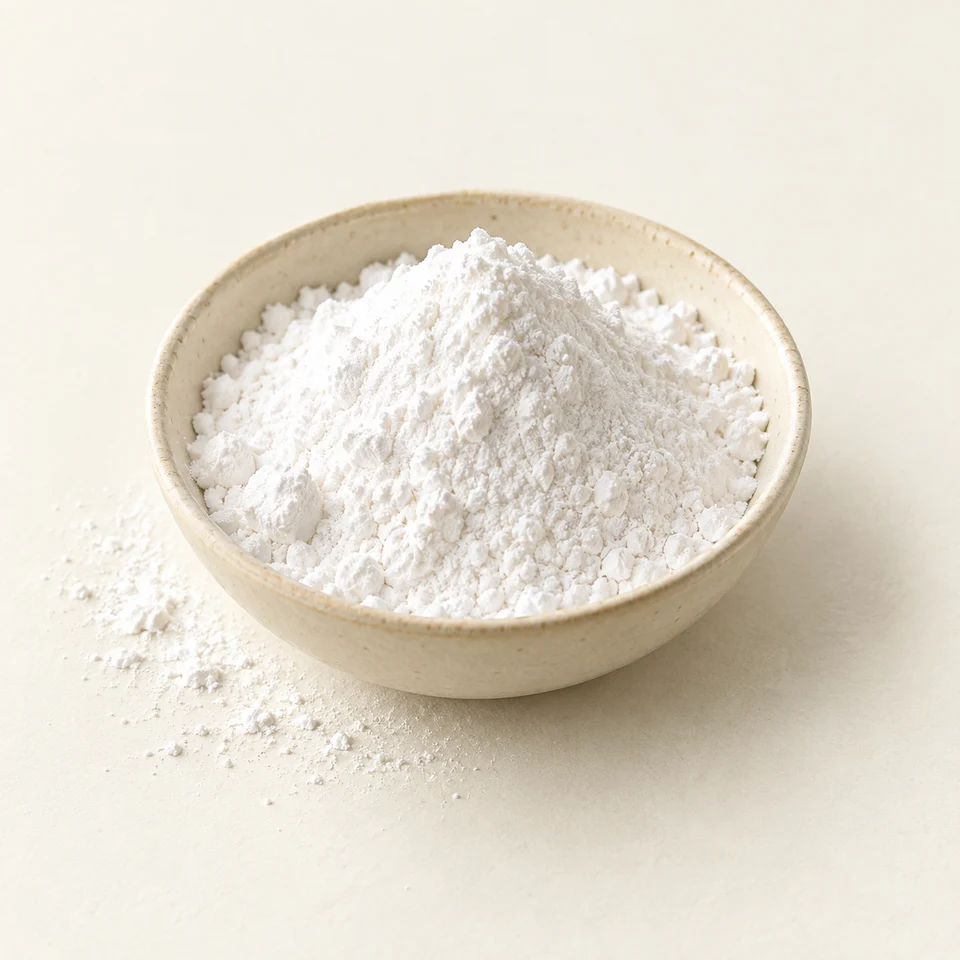
About Tapioca Starch
Tapioca starch is a fine, purified starch separated from cassava and dried into a powder. It is used to thicken sauces, gravies, fillings, and puddings, and to modify the texture of noodles, batters, breads, and other baked goods.
It has a neutral flavour and a smooth, powdery texture. When heated with liquid, it can produce glossy thickening; in doughs and batters, it can contribute elasticity, tenderness, or chewiness. The result depends on the quantity used and the other ingredients in the preparation.
The starch is generally white or off-white and sold as a dry powder. In many markets, it is sold under the interchangeable label tapioca flour. Hydration and heating turn the powder into a glossy thickener or help produce more elastic, tender, or chewy cooked foods, while the label alone does not establish a technical distinction.
- Ingredient type
- flour
Forms & related ingredients
FOLLOW IT TO THE PLATE
Where will you meet it?
Explore the dishes that use this ingredient and their country and cuisine connections.
Explore linked dishesON A MENU OR LABEL
Find local names and written forms to help recognise this ingredient.
See local namesWhere tapioca starch appears
23 linked foodsFind foods to recognise by country and type. Recipes and products vary; these are recorded ingredient connections.
Showing 13–23 of 23
Desserts
Soups

Noodle dishes

Breads
Pão de queijo
Optional additionDrinks
Street food

Ingredient connections awaiting review · Coverage is still growing, including packaged snacks.
Name examples awaiting language review. Confirm the specific food or product.
Local names for tapioca starch
Names and romanised forms to recognise on menus and labels.
Tapioca starch
Amido de tapioca
Amidon de tapioca
Almidón de tapioca
Tapiokastärke
Amido di tapioca
Tapiocazetmeel
Pati tapioka
タピオカスターチ
Tapioka sutāchi
타피오카 전분
Tap’ioka jeonbun
نشا التابيوكا
Nashā al-tābyūkā
टैपिओका स्टार्च
Taipiyoka sṭārch
Tapioka sutāchi
Romanised form
modified tapioca starch
Search alias · Not a confirmed translation
Nashā al-tābyūkā
Romanised form
Tap’ioka jeonbun
Romanised form
Taipiyoka sṭārch
Romanised form
Available names only. Languages may be spoken in other countries; a name alone does not identify every ingredient in a dish.
Name not available yet.
A name in English has not been added for tapioca starch. Choose another language to see its available names.
Tapioca Starch nutrition & diet
Tapioca Starch nutritional value
Starch, cassava starch — MEXT 02028
Per 100 g of the edible portion in the explicitly named reference form.
- Calories
- 354kcal
- Protein
- 0.1g
- Carbs
- 85.3g
- Fat
- 0.2g
Per 100 g edible portion. Values use MEXT 2023 with March 2026 corrections; the English food name is matched by food code from the official English edition. Carbohydrate is total carbohydrate by difference. Values in parentheses in the source are estimates reported by MEXT. This reference does not cover other preparations or brands.
Portions & preparation
Use tapioca starch according to its role as a thickener, binder, or elasticizing ingredient rather than as a standalone flour serving. Heating with liquid changes its texture and distribution. References should distinguish dry starch from a finished batter, noodle, sauce, or baked product containing it.
Compare the right form: Match references to dry cassava-derived tapioca starch, not tapioca flour blends, cooked gel, noodles, batter, or finished baked goods.
Diet considerations
Tapioca starch is plant-derived from cassava, but compatibility changes when it appears in blends or prepared foods. Check for cereal flours, dairy, egg, animal fats, coatings, and processing ingredients. Its portion in a recipe also determines how its starch contribution fits the overall eating pattern.
AI-authored reading notes · Awaiting editorial review. Measured values, where available, have a separate source above.
Dietary compatibility
- VeganNot established
- VegetarianNot established
- PescatarianNot established
- KetoNot established
- PaleoNot established
- Low-carbNot established
- HalalNot established
- KosherNot established
What these diet assessments mean
- Vegan · Not established
- The available profile does not establish the full composition or processing for this dietary pattern.
- Vegetarian · Not established
- The available profile does not establish the full composition or processing for this dietary pattern.
- Pescatarian · Not established
- The available profile does not establish the full composition or processing for this dietary pattern.
- Keto · Not established
- A defined serving and sourced carbohydrate data are needed before assessing this dietary pattern.
- Paleo · Not established
- The ingredient form and processing have not been assessed against this dietary pattern.
- Low-carb · Not established
- A defined serving and sourced carbohydrate data are needed before assessing this dietary pattern.
- Halal · Not established
- Sourcing, processing and any applicable certification have not been verified. A food name alone does not establish halal status.
- Kosher · Not established
- Sourcing, processing and any applicable certification have not been verified. A food name alone does not establish kosher status.
For the plain ingredient · Awaiting review. Diet compatibility is not allergy suitability or halal/kosher certification. Keto and low-carb depend on the portion.
AI-generated illustration for visual context. It does not identify a particular product or establish allergen content.
Sources & review
Nutrition reference: MEXT Standard Tables of Food Composition in Japan, 2023 supplement, corrected March 2026 ↗. Values are scaled from 100 g of the recorded edible form. Individual portions have no assumed fixed weight.
Expanded overview, name examples and nutrition notes are database drafts awaiting editorial review. Numeric nutrition values, where shown, have their own source and food-form reference.
The ingredient description and dish connections come from the draft catalogue and may change after review.
Last recorded verification: .