
Cumin
Cumin is an aromatic spice made from the dried seeds of the cumin plant and is used in savory seasoning blends and dishes.
About Cumin
Cumin is a dried spice consisting of the aromatic seeds of the cumin plant, used to season savoury dishes including legume preparations, rice dishes, breads, sauces, and spice blends. The label may refer to whole or ground seed spice.
Its flavour is warm, earthy, penetrating, and somewhat bitter. Whole seeds have a firm texture, while ground cumin is a loose powder; the flavour becomes more pronounced when the seeds are toasted.
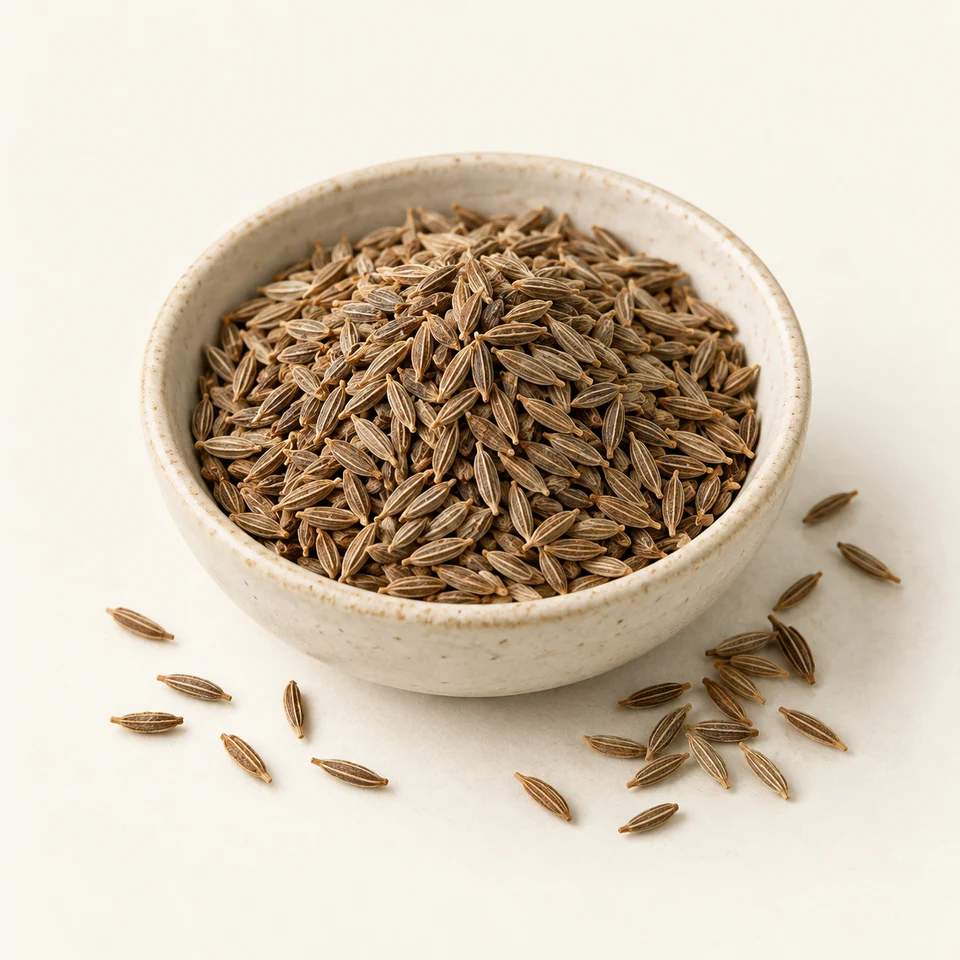
Whole cumin seeds are narrow, ridged, and brownish, while ground cumin is a loose powder. It is sold whole or ground, and toasting, grinding, and removal or inclusion after cooking change its texture, aroma, and contribution to a dish.
- Ingredient type
- seasoning
Forms & related ingredients
FOLLOW IT TO THE PLATE
Where will you meet it?
Explore the dishes that use this ingredient and their country and cuisine connections.
Explore linked dishesON A MENU OR LABEL
Find local names and written forms to help recognise this ingredient.
See local namesWhere cumin appears
326 linked foodsFind foods to recognise by country and type. Recipes and products vary; these are recorded ingredient connections.
Showing 1–12 of 326
Main dishes


Ingredient connections awaiting review · Coverage is still growing, including packaged snacks.
Name examples awaiting language review. Confirm the specific food or product.
Local names for cumin
Names and romanised forms to recognise on menus and labels.
كمون
kammun
जीरा
jīrā
comino
cumin
cumin
Kreuzkümmel
cumino
cominho
komijn
comí
kimyon
κύμινο
kýmino
зира
zira
зіра
zira
kumin
rímska rasca
római kömény
chimion
кимион
kimion
kumin
kumin
кимин
kimin
rimska kumina
spiskummin
spidskommen
spisskummen
juustokumina
vürtsköömen
romiešu ķimenes
kuminas
spískúmen
cimín
kumino
comiño
زیره
zīre
زیرہ
zīrah
জিরা
jirā
ਜੀਰਾ
jīrā
જીરું
jīruṁ
जिरे
jire
जिरा
jirā
சீரகம்
cīrakam
ಜೀರಿಗೆ
jīrige
జీలకర్ర
jīlakarra
ജീരകം
jīrakaṁ
සූදුරු
sūduru
孜然
zīrán
クミン
kumin
쿠민
kumin
jintan putih
jintan putih
zirə
зире
zire
зире
zire
zira
zira
зира
zira
ძირა
dzira
չաման
chaman
כמון
kammon
jirā
Romanised form
kýmino
Romanised form
jīrige
Romanised form
kumin
Romanised form
Cumin (cummin) seed, dried, ground
Search alias · Not a confirmed translation
cumin seeds
Search alias · Not a confirmed translation
Cumin, graine
Search alias · Not a confirmed translation
cīrakam
Romanised form
zire
Romanised form
kammun
Romanised form
zira
Romanised form
kumin
Romanised form
jirā
Romanised form
zire
Romanised form
sūduru
Romanised form
zīrán
Romanised form
jīrā
Romanised form
jīrakaṁ
Romanised form
zīrah
Romanised form
zira
Romanised form
kimion
Romanised form
chaman
Romanised form
kammon
Romanised form
zīre
Romanised form
kimin
Romanised form
jīruṁ
Romanised form
jire
Romanised form
dzira
Romanised form
zira
Romanised form
jīrā
Romanised form
jīlakarra
Romanised form
Available names only. Languages may be spoken in other countries; a name alone does not identify every ingredient in a dish.
Name not available yet.
A name in English has not been added for cumin. Choose another language to see its available names.
Cumin nutrition & diet
Cumin nutritional value
Spices, cumin seed
Per 100 g of the edible portion in the recorded food form.
- Calories
- 375kcal
- Protein
- 17.8g
- Carbs
- 44.2g
- Fat
- 22.3g
Reference values for the specific food form shown. Other varieties, brands and preparations can differ.
Portions & preparation
Use the cumin form actually consumed, distinguishing ground spice from whole seeds and measuring the amount incorporated into the dish. Toasting, blooming in oil, or mixing into a seasoning blend changes the preparation context; record added salt, oil, and other ingredients separately from cumin.
Compare the right form: Match ground dried cumin or another labeled form, specifying whether it is plain, toasted, oil-bloomed, or part of a blend.
Diet considerations
Cumin is plant-derived. Plain ground cumin generally differs from curry powders, taco seasonings, pastes, and commercial blends that may contain salt, sugar, cereal ingredients, dairy, or animal-derived flavorings. Dietary impact is portion-dependent, while the recipe carrying the spice determines most compatibility considerations.
AI-authored reading notes · Awaiting editorial review. Measured values, where available, have a separate source above.
Dietary compatibility
- VeganTypically compatible
- VegetarianTypically compatible
- PescatarianTypically compatible
- KetoNot established
- PaleoMay be compatible
- Low-carbNot established
- HalalNot established
- KosherNot established
What these diet assessments mean
- Vegan · Typically compatible
- The plain ingredient profile is plant, fungal or mineral based. Added ingredients in a prepared product need a separate check.
- Vegetarian · Typically compatible
- The plain ingredient profile is plant, fungal or mineral based. Added ingredients in a prepared product need a separate check.
- Pescatarian · Typically compatible
- The plain ingredient profile is plant, fungal or mineral based. Added ingredients in a prepared product need a separate check.
- Keto · Not established
- A defined serving and sourced carbohydrate data are needed before assessing this dietary pattern.
- Paleo · May be compatible
- May fit a paleo pattern, depending on the cut or form, processing and added ingredients.
- Low-carb · Not established
- A defined serving and sourced carbohydrate data are needed before assessing this dietary pattern.
- Halal · Not established
- Sourcing, processing and any applicable certification have not been verified. A food name alone does not establish halal status.
- Kosher · Not established
- Sourcing, processing and any applicable certification have not been verified. A food name alone does not establish kosher status.
For the plain ingredient · Awaiting review. Diet compatibility is not allergy suitability or halal/kosher certification. Keto and low-carb depend on the portion.
AI-generated illustration for visual context. It does not identify a particular product or establish allergen content.
Sources & review
Nutrition reference: USDA FoodData Central — Spices, cumin seed ↗. Values are scaled from 100 g of the recorded edible form. Individual portions have no assumed fixed weight.
Expanded overview, name examples and nutrition notes are database drafts awaiting editorial review. Numeric nutrition values, where shown, have their own source and food-form reference.
The ingredient description and dish connections come from the draft catalogue and may change after review.
Last recorded verification: .