
Dried yellow peas
Dried yellow peas are mature legumes used in soups, stews, purées, and other cooked dishes.
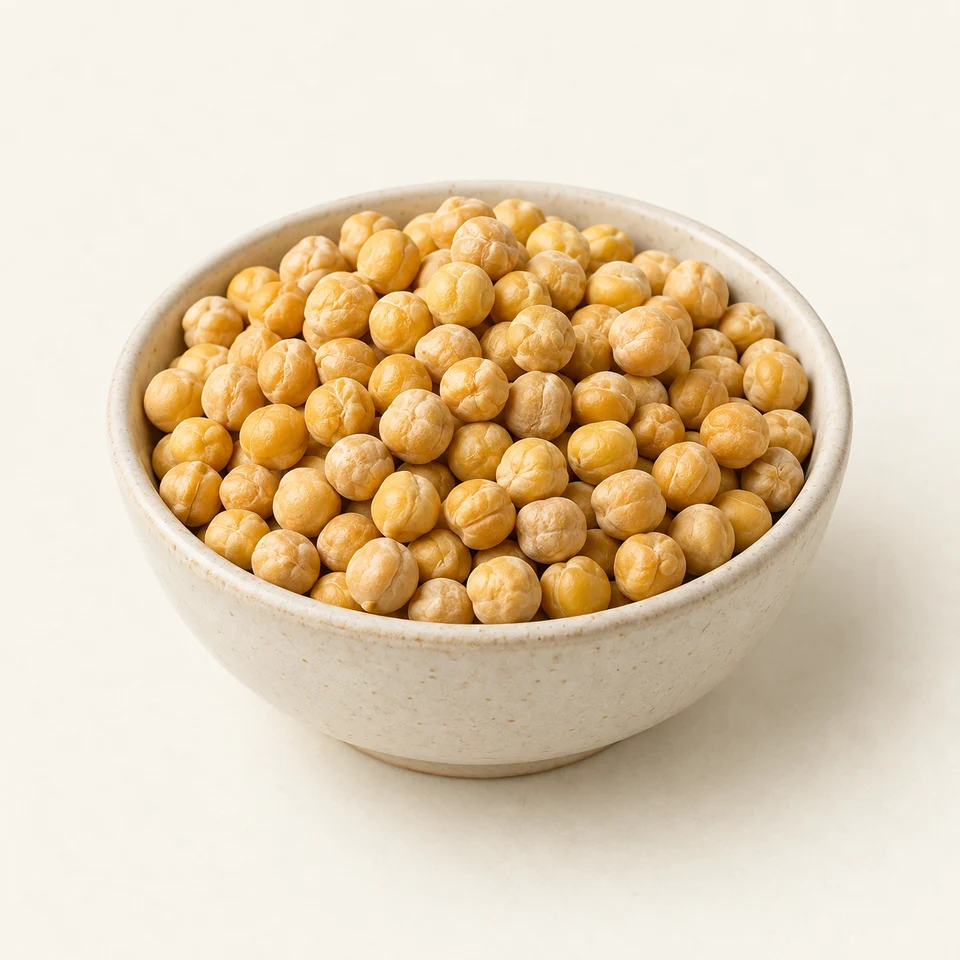
About Dried yellow peas
Dried yellow peas are mature yellow pea seeds harvested after drying and sold as a shelf-stable pulse. They may be whole or split, and are used in soups, stews, purées, dals, casseroles, and other simmered dishes.
Their flavour is mild, earthy, and gently sweet. Whole seeds can retain a more distinct shape, while split peas cook more readily and may break down into a thick, smooth base; the description does not specify the cultivar or polishing.
The seeds are usually yellow to pale ochre when dry and become softer and creamier when cooked. Soaking, age, and whether the peas are whole or split affect cooking time and texture.
- Ingredient type
- whole food
FOLLOW IT TO THE PLATE
Where will you meet it?
Explore the dishes that use this ingredient and their country and cuisine connections.
Explore linked dishesON A MENU OR LABEL
Find local names and written forms to help recognise this ingredient.
See local namesWhere dried yellow peas appears
20 linked foodsFind foods to recognise by country and type. Recipes and products vary; these are recorded ingredient connections.
Showing 1–12 of 20
Main dishes


Sides

Snacks


Ingredient connections awaiting review · Coverage is still growing, including packaged snacks.
Name examples awaiting language review. Confirm the specific food or product.
Local names for dried yellow peas
Names and romanised forms to recognise on menus and labels.
Dried yellow peas
dried yellow peas
pois jaunes secs
getrocknete gelbe Erbsen
guisantes amarillos secos
piselli gialli secchi
suszony żółty groch
сушёный жёлтый горох
sushony zholty gorokh
torkade gula ärter
gedroogde gele erwten
tørrede gule ærter
tørkede gule erter
kuivatut keltaiset herneet
सूखी पीली मटर
sūkhī pīlī maṭar
干黄豌豆
gān huáng wāndòu
乾燥黄えんどう豆
kansō ki endōmame
말린 노란 완두콩
mallin nolan wandukong
kansō ki endōmame
Romanised form
mallin nolan wandukong
Romanised form
gān huáng wāndòu
Romanised form
sūkhī pīlī maṭar
Romanised form
sushony zholty gorokh
Romanised form
Available names only. Languages may be spoken in other countries; a name alone does not identify every ingredient in a dish.
Name not available yet.
A name in English has not been added for dried yellow peas. Choose another language to see its available names.
Dried yellow peas nutrition & diet
Dried yellow peas nutritional value
Pea, yellow, whole, dried
Per 100 g of the edible portion in the stated food form.
- Calories
- 325.3kcal
- Protein
- 23.3g
- Carbs
- 43.6g
- Fat
- 2.3g
Reference values apply to the named food form, not every preparation, variety or brand. © Food Standards Australia New Zealand. AFCD Release 3, food F006545. Available carbohydrate excludes sugar alcohols; energy converted from kJ to kcal (÷4.184). Australian data may not be appropriate for use in other countries. There are limitations associated with food composition databases. Food composition data used in the database or databases may represent an average of the nutrient content of a particular sample of foods and ingredients, determined at a particular time. The nutrient composition of foods and ingredients can vary substantially between batches and brands because of a number of factors, including changes in season, processing practices and ingredient source, and methods of calculation. Data licensed under the FSANZ Data User Licence Agreement, based on CC BY-SA 3.0 AU: https://www.foodstandards.gov.au/science-data/monitoringnutrients/afcd/datauserlicenceagreement.
Portions & preparation
Use the dry ingredient for reference when portioning before cooking, and distinguish whole peas from split peas because cooking time and texture differ. Soaking, boiling, puréeing, and adding oil or stock change the finished preparation, while discarded soaking or cooking liquid is not part of the edible portion.
Compare the right form: Reference should match dried yellow peas as whole or split, with the same raw, soaked, boiled, or puréed form used.
Diet considerations
Yellow peas are plant-derived legumes. Compatibility changes when cooked with meat, broth, dairy, animal fat, or cereal ingredients, and when packaged with flavorings. Their carbohydrate pattern is portion-dependent and also varies between the plain cooked peas and preparations thickened with flour or grains.
AI-authored reading notes · Awaiting editorial review. Measured values, where available, have a separate source above.
Dietary compatibility
- VeganTypically compatible
- VegetarianTypically compatible
- PescatarianTypically compatible
- KetoDepends on the version
- PaleoTypically incompatible
- Low-carbDepends on the version
- HalalNot established
- KosherNot established
What these diet assessments mean
- Vegan · Typically compatible
- The plain ingredient profile is plant, fungal or mineral based. Added ingredients in a prepared product need a separate check.
- Vegetarian · Typically compatible
- The plain ingredient profile is plant, fungal or mineral based. Added ingredients in a prepared product need a separate check.
- Pescatarian · Typically compatible
- The plain ingredient profile is plant, fungal or mineral based. Added ingredients in a prepared product need a separate check.
- Keto · Depends on the version
- Compatibility depends on the portion and preparation. A sourced carbohydrate amount for a defined serving is not available.
- Paleo · Typically incompatible
- This profile falls outside the conventional paleo pattern used here (grains and pseudograins, legumes, dairy or refined sugar).
- Low-carb · Depends on the version
- Compatibility depends on the portion and preparation. A sourced carbohydrate amount for a defined serving is not available.
- Halal · Not established
- Sourcing, processing and any applicable certification have not been verified. A food name alone does not establish halal status.
- Kosher · Not established
- Sourcing, processing and any applicable certification have not been verified. A food name alone does not establish kosher status.
For the plain ingredient · Awaiting review. Diet compatibility is not allergy suitability or halal/kosher certification. Keto and low-carb depend on the portion.
AI-generated illustration for visual context. It does not identify a particular product or establish allergen content.
Sources & review
Nutrition reference: Australian Food Composition Database, Release 3, 2025 — Pea, yellow, whole, dried ↗. Values are scaled from 100 g of the recorded edible form. Individual portions have no assumed fixed weight.
Expanded overview, name examples and nutrition notes are database drafts awaiting editorial review. Numeric nutrition values, where shown, have their own source and food-form reference.
The ingredient description and dish connections come from the draft catalogue and may change after review.
Last recorded verification: .