
Fenugreek Seed
Fenugreek seeds are aromatic seeds used whole or ground in spice blends, curries, pickles, and breads.
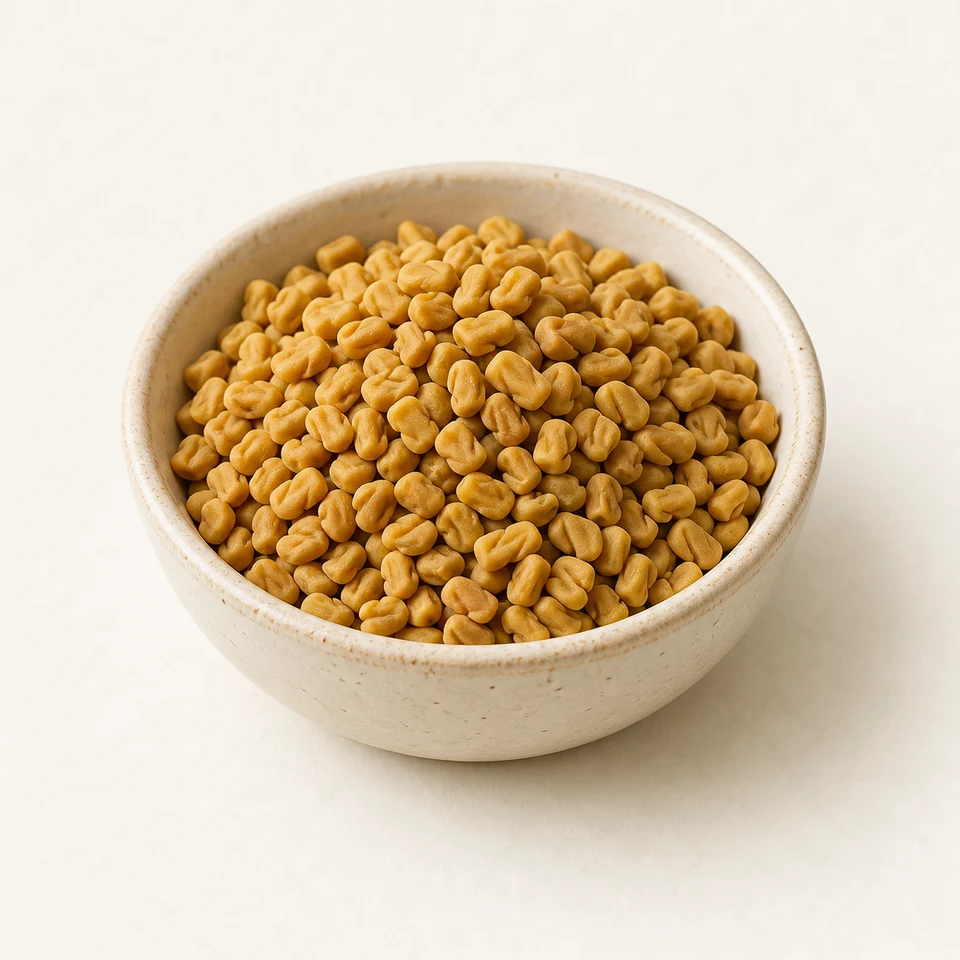
About Fenugreek Seed
Fenugreek seeds are the small, hard, angular seeds of the fenugreek plant, used as a spice in curries, pickles, spice blends, breads, sauces, and savoury vegetable dishes. They are often added in modest quantities because their flavour is strong and their bitterness can dominate when overused.
The seeds have a warm, distinctive aroma and a bitter flavour with sweet, maple-like notes. Toasting deepens their fragrance and can round the bitterness, while prolonged cooking softens whole seeds. Ground seed spreads evenly through a mixture and releases flavour more quickly than intact seed.
Fenugreek seeds are commonly sold whole, with a yellow-brown to amber colour. They may be dry-toasted, fried briefly in oil, soaked, or ground. Whole seeds remain visible and retain some bite; soaked seeds become softer, and ground seeds form part of a paste or spice blend.
- Ingredient type
- seasoning
FOLLOW IT TO THE PLATE
Where will you meet it?
Explore the dishes that use this ingredient and their country and cuisine connections.
Explore linked dishesON A MENU OR LABEL
Find local names and written forms to help recognise this ingredient.
See local namesWhere fenugreek seed appears
7 linked foodsFind foods to recognise by country and type. Recipes and products vary; these are recorded ingredient connections.
Showing 1–7 of 7
Main dishes

Sauces

Breakfasts
Malaysian Thosai
Optional additionIngredient connections awaiting review · Coverage is still growing, including packaged snacks.
Name examples awaiting language review. Confirm the specific food or product.
Local names for fenugreek seed
Names and romanised forms to recognise on menus and labels.
मेथी दाना
methi dana
methi dana
graines de fenugrec
semi di fieno greco
Fenugreek Seed
fenugreek seed
graine de fenugrec
semillas de fenogreco
sementes de feno-grego
Bockshornkleesamen
fenegriekzaad
nasiona kozieradki
semena pískavice
semená senovky gréckej
семена пажитника
semena pazhitnika
насіння пажитника
nasinnia pाज़hитnyka
σπόροι τριγωνέλλας
spóroi trigonéllas
çemen tohumu
بذور الحلبة
budhūr al-ḥilba
دانه شنبلیله
dāne-ye shanbalīle
זרעי חילבה
zar'ei ḥilba
মেথি দানা
methi dana
मेथी दाणे
mēthī dāṇē
મેથીના દાણા
mēthīnā dāṇā
ਮੇਥੀ ਦਾਣਾ
mēthī dāṇā
میتھی دانہ
mēthī dāna
வெந்தய விதை
venthaya vithai
మెంతులు
mentulu
ഉലുവ വിത്ത്
ulūva vittu
ಮೆಂತ್ಯ ಬೀಜ
menthya bīja
フェヌグリークシード
fenugurīku shīdo
호로파씨
horopassi
葫芦巴籽
húlúbā zǐ
biji klabet
biji halba
spóroi trigonéllas
Romanised form
menthya bīja
Romanised form
fenugurīku shīdo
Romanised form
Fenugreek seed, dried
Search alias · Not a confirmed translation
Ground fenugreek seeds
Search alias · Not a confirmed translation
venthaya vithai
Romanised form
budhūr al-ḥilba
Romanised form
nasinnia pाज़hитnyka
Romanised form
horopassi
Romanised form
methi dana
Romanised form
húlúbā zǐ
Romanised form
methi dāna
Romanised form
ulūva vittu
Romanised form
mēthī dāna
Romanised form
semena pazhitnika
Romanised form
zar'ei ḥilba
Romanised form
dāne-ye shanbalīle
Romanised form
mēthīnā dāṇā
Romanised form
mēthī dāṇē
Romanised form
mēthī dāṇā
Romanised form
mentulu
Romanised form
Available names only. Languages may be spoken in other countries; a name alone does not identify every ingredient in a dish.
Name not available yet.
A name in English has not been added for fenugreek seed. Choose another language to see its available names.
Fenugreek Seed nutrition & diet
Fenugreek Seed nutritional value
Spices, fenugreek seed
Per 100 g of the edible portion in the recorded food form.
- Calories
- 323kcal
- Protein
- 23.0g
- Carbs
- 58.4g
- Fat
- 6.4g
Reference values for the specific food form shown. Other varieties, brands and preparations can differ.
Portions & preparation
Use a reference for whole or ground fenugreek seed rather than fenugreek leaf. Specify whether seeds are dry-roasted, soaked, cooked, or incorporated into a blend, because preparation and dilution differ. For a served dish, record oil, salt, sweeteners, flour, and other ingredients alongside the seed portion.
Compare the right form: Reference must match fenugreek seed as whole, ground, roasted, soaked, cooked, or blended, using the edible seed portion.
Diet considerations
Fenugreek seed is plant-derived, but a seasoning blend or prepared pickle may add oil, salt, sugar, dairy, animal ingredients, or cereal products. Plain seed and seed-containing bread are not interchangeable entries. Its carbohydrate pattern should be interpreted in relation to the amount used and the rest of the recipe.
AI-authored reading notes · Awaiting editorial review. Measured values, where available, have a separate source above.
Dietary compatibility
- VeganTypically compatible
- VegetarianTypically compatible
- PescatarianTypically compatible
- KetoNot established
- PaleoMay be compatible
- Low-carbNot established
- HalalNot established
- KosherNot established
What these diet assessments mean
- Vegan · Typically compatible
- The plain ingredient profile is plant, fungal or mineral based. Added ingredients in a prepared product need a separate check.
- Vegetarian · Typically compatible
- The plain ingredient profile is plant, fungal or mineral based. Added ingredients in a prepared product need a separate check.
- Pescatarian · Typically compatible
- The plain ingredient profile is plant, fungal or mineral based. Added ingredients in a prepared product need a separate check.
- Keto · Not established
- A defined serving and sourced carbohydrate data are needed before assessing this dietary pattern.
- Paleo · May be compatible
- May fit a paleo pattern, depending on the cut or form, processing and added ingredients.
- Low-carb · Not established
- A defined serving and sourced carbohydrate data are needed before assessing this dietary pattern.
- Halal · Not established
- Sourcing, processing and any applicable certification have not been verified. A food name alone does not establish halal status.
- Kosher · Not established
- Sourcing, processing and any applicable certification have not been verified. A food name alone does not establish kosher status.
For the plain ingredient · Awaiting review. Diet compatibility is not allergy suitability or halal/kosher certification. Keto and low-carb depend on the portion.
AI-generated illustration for visual context. It does not identify a particular product or establish allergen content.
Sources & review
Nutrition reference: USDA FoodData Central — Spices, fenugreek seed ↗. Values are scaled from 100 g of the recorded edible form. Individual portions have no assumed fixed weight.
Expanded overview, name examples and nutrition notes are database drafts awaiting editorial review. Numeric nutrition values, where shown, have their own source and food-form reference.
The ingredient description and dish connections come from the draft catalogue and may change after review.
Last recorded verification: .