
Cassava
Cassava is a starchy tuberous root commonly boiled, fried, baked, or processed into flour and starch.
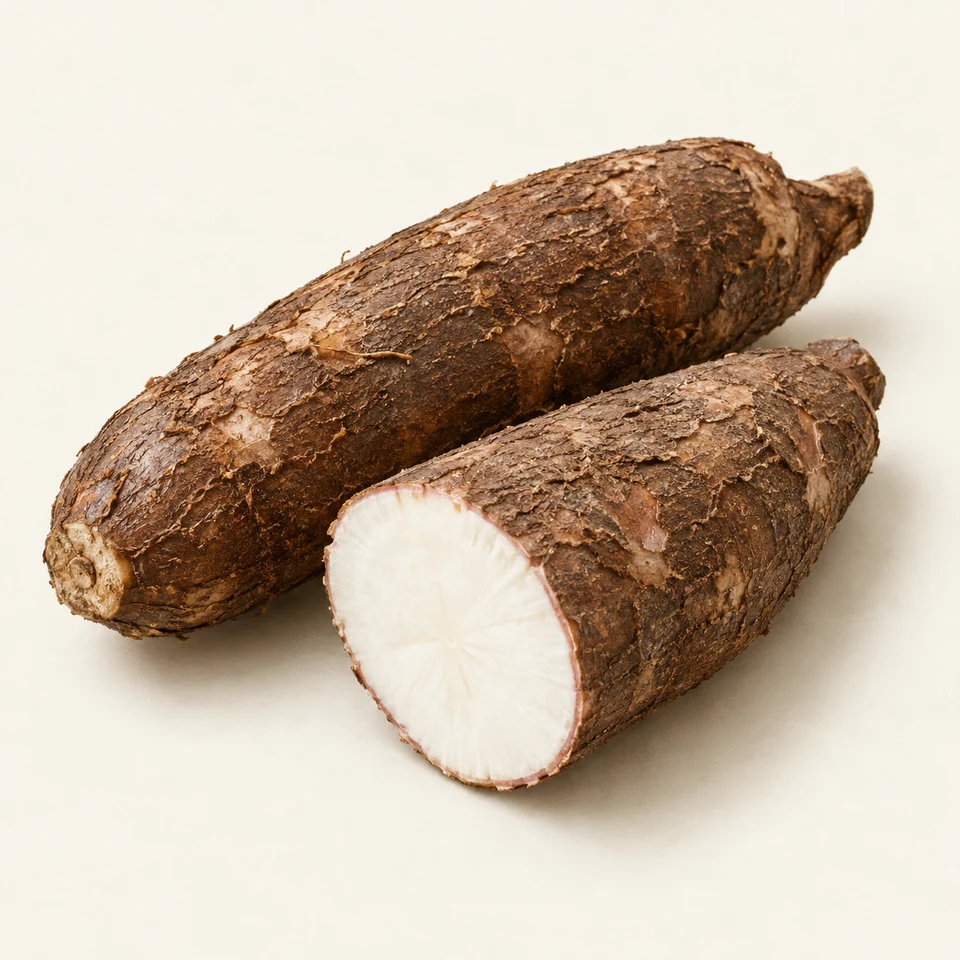
About Cassava
Yuca, also called cassava, is the enlarged starchy root of the cassava plant. It is commonly boiled, steamed, baked, fried, or mashed, and is used in side dishes, doughs, and other preparations.
Raw yuca has firm white to cream flesh and a dense, somewhat waxy texture. Cooking makes it soft and crumbly or chewy depending on cooking method and variety; the thick, rough brown outer skin is removed before use.
Yuca is sold as whole roots, peeled pieces, frozen portions, chips, and flour or meal made from processed cassava. Preparation removes the tough peel and central fibrous core as needed, while sauces and other additions change the finished dish.
- Ingredient type
- whole food
Forms & related ingredients
FOLLOW IT TO THE PLATE
Where will you meet it?
Explore the dishes that use this ingredient and their country and cuisine connections.
Explore linked dishesON A MENU OR LABEL
Find local names and written forms to help recognise this ingredient.
See local namesWhere cassava appears
121 linked foodsFind foods to recognise by country and type. Recipes and products vary; these are recorded ingredient connections.
Showing 1–12 of 121
Main dishes


Ingredient connections awaiting review · Coverage is still growing, including packaged snacks.
Name examples awaiting language review. Confirm the specific food or product.
Local names for cassava
Names and romanised forms to recognise on menus and labels.
yuca
mandioca
aipim
Yuca
cassava
manioc
manioca
Maniok
cassave
manyok
singkong
ubi kayu
sắn
มันสำปะหลัง
man sampalang
muhogo
rogo
ካሳቫ
kasāva
كسافا
kasāfā
कसावा
kasāvā
কাসাভা
kāsābhā
மரவள்ளிக்கிழங்கு
maravaḷḷikkiḻaṅku
కర్రపెండలం
karrapeṇḍalaṃ
ಕಸಾವಾ
kasāvā
കപ്പ
kappa
මඤ්ඤොක්කා
maññokkā
카사바
kasaba
キャッサバ
kyassaba
木薯
mùshǔ
kasāvā
Romanised form
कसावा
manióka
Romanised form
μανιόκα
kasāvā
Romanised form
marageṇasu
Romanised form
ಮರಗೆಣಸು
manioka
kyassaba
Romanised form
cassava (raw)
Search alias · Not a confirmed translation
Cassava, baked
Search alias · Not a confirmed translation
Cassava, boiled in unsalted water
Search alias · Not a confirmed translation
Cassava, cooked
Search alias · Not a confirmed translation
Cassava, frozen, raw
Search alias · Not a confirmed translation
Cassava, peeled, fresh, boiled, drained
Search alias · Not a confirmed translation
Cassava, peeled, fresh, raw
Search alias · Not a confirmed translation
Cassava, steamed
Search alias · Not a confirmed translation
Cassava, white flesh, peeled, fresh, boiled, drained
Search alias · Not a confirmed translation
Cassava, white flesh, peeled, fresh, raw
Search alias · Not a confirmed translation
Cassava, yellow flesh, peeled, fresh, boiled, drained
Search alias · Not a confirmed translation
Cassava, yellow flesh, peeled, fresh, raw
Search alias · Not a confirmed translation
raw cassava
Search alias · Not a confirmed translation
dâmloông mi
Romanised form
ដំឡូងមី
maravaḷḷikkiḻaṅku
Romanised form
mandioca
man ton
Romanised form
ມັນຕົ້ນ
kasāva
Romanised form
kasāfā
Romanised form
kassāfā
Romanised form
maniok
Romanised form
маніок
kasaba
Romanised form
kāsābhā
Romanised form
maniok
manioka
maññokkā
Romanised form
mùshǔ
Romanised form
kasāvā
Romanised form
manioka
kappa
Romanised form
singkong
maniok
Romanised form
маниок
manioka
Romanised form
маниока
manioc
kāsāvā
Romanised form
کاساوا
manioka
mandioca
maniok
maniok
man sam-palang
Romanised form
man sampalang
Romanised form
kamoteng kahoy
manióka
karrapeṇḍalaṃ
Romanised form
Cassava (Yuca)
Search alias · Not a confirmed translation
Cassava Yuca
Search alias · Not a confirmed translation
Available names only. Languages may be spoken in other countries; a name alone does not identify every ingredient in a dish.
Name not available yet.
A name in English has not been added for cassava. Choose another language to see its available names.
Cassava nutrition & diet
Cassava nutritional value
Cassava, raw
Per 100 g of the edible portion in the recorded food form.
- Calories
- 160kcal
- Protein
- 1.4g
- Carbs
- 38.1g
- Fat
- 0.3g
Reference values for the specific food form shown. Other varieties, brands and preparations can differ.
Portions & preparation
Match the reference to peeled cassava root in the same raw, boiled, baked, mashed, frozen, or fried form. Record whether fibrous core and peel are removed and how much cooking liquid or oil remains. A plain cooked root and a prepared fried or seasoned product are different catalogue entries.
Compare the right form: Match a reference to peeled yuca flesh with the same raw or cooked state, core removal, preparation method, and edible portion.
Diet considerations
Yuca is a plant-derived cassava root. Compatibility changes when it is fried, battered, coated, mashed with dairy or animal fat, or served with meat-based sauces or broth. Distinguish plain cooked root from prepared products; portion size and preparation produce different carbohydrate patterns.
AI-authored reading notes · Awaiting editorial review. Measured values, where available, have a separate source above.
Dietary compatibility
- VeganTypically compatible
- VegetarianTypically compatible
- PescatarianTypically compatible
- KetoDepends on the version
- PaleoTypically compatible
- Low-carbDepends on the version
- HalalNot established
- KosherNot established
What these diet assessments mean
- Vegan · Typically compatible
- The plain ingredient profile is plant, fungal or mineral based. Added ingredients in a prepared product need a separate check.
- Vegetarian · Typically compatible
- The plain ingredient profile is plant, fungal or mineral based. Added ingredients in a prepared product need a separate check.
- Pescatarian · Typically compatible
- The plain ingredient profile is plant, fungal or mineral based. Added ingredients in a prepared product need a separate check.
- Keto · Depends on the version
- Compatibility depends on the portion and preparation. A sourced carbohydrate amount for a defined serving is not available.
- Paleo · Typically compatible
- The plain form fits the conventional paleo food groups. Added ingredients and individual interpretations can differ.
- Low-carb · Depends on the version
- Compatibility depends on the portion and preparation. A sourced carbohydrate amount for a defined serving is not available.
- Halal · Not established
- Sourcing, processing and any applicable certification have not been verified. A food name alone does not establish halal status.
- Kosher · Not established
- Sourcing, processing and any applicable certification have not been verified. A food name alone does not establish kosher status.
For the plain ingredient · Awaiting review. Diet compatibility is not allergy suitability or halal/kosher certification. Keto and low-carb depend on the portion.
AI-generated illustration for visual context. It does not identify a particular product or establish allergen content.
Sources & review
Nutrition reference: USDA FoodData Central — Cassava, raw ↗. Values are scaled from 100 g of the recorded edible form. Individual portions have no assumed fixed weight.
Expanded overview, name examples and nutrition notes are database drafts awaiting editorial review. Numeric nutrition values, where shown, have their own source and food-form reference.
The ingredient description and dish connections come from the draft catalogue and may change after review.
Last recorded verification: .