
Extra-virgin olive oil
A high-grade olive oil obtained by mechanical extraction and used for dressing, cooking, and finishing dishes.
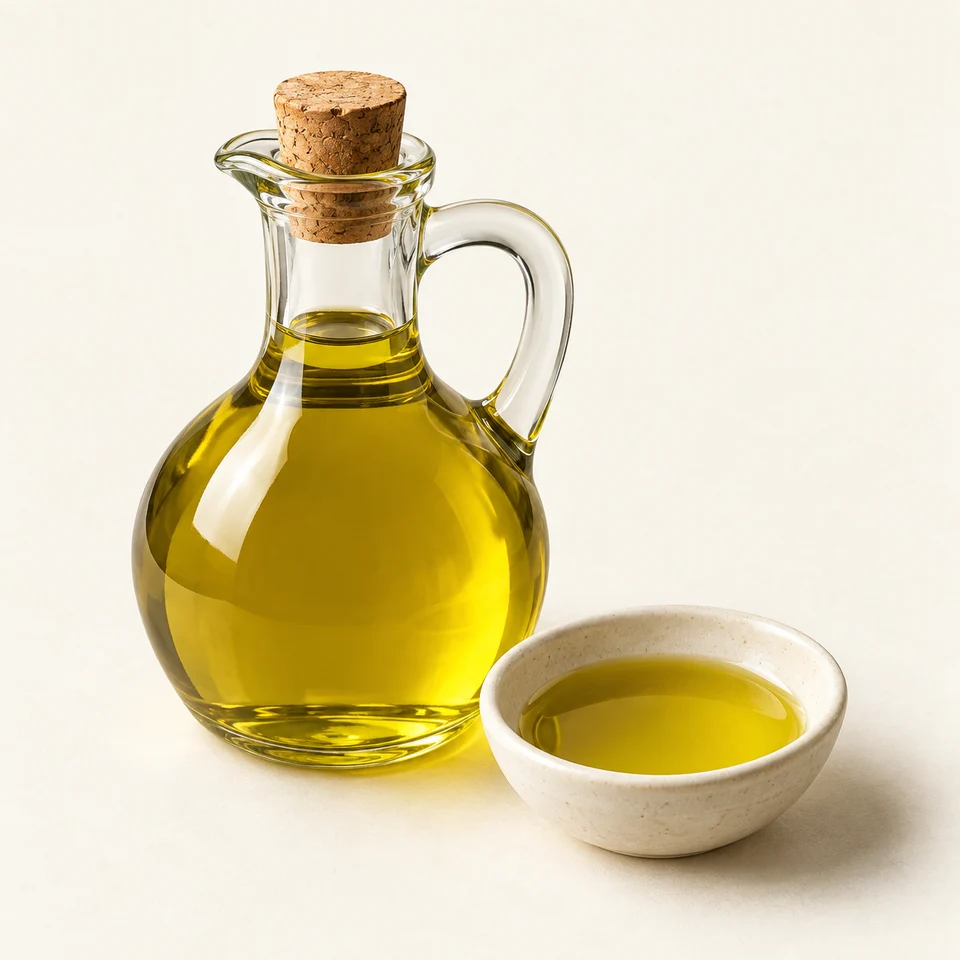
About Extra-virgin olive oil
Extra-virgin olive oil is olive oil obtained by mechanical or other physical means and meeting the requirements of the extra-virgin grade. It is used as a dressing, dipping oil, marinade ingredient, cooking oil, or finishing oil. Its character reflects the olives, harvest, and production choices behind the bottle.
The oil can smell and taste fruity, grassy, herbal, peppery, bitter, or mild. Its body is fluid and silky, coating salad leaves and other ingredients readily. Green-tasting oils may have a lively, peppery finish, while ripe-olive styles are often softer and more rounded. Heat changes both aroma and flavour expression.
It ranges in appearance from green to golden and may be clear or slightly cloudy depending on filtration and storage. Bottles can contain oil from one variety, several varieties, one region, or a blend. It remains liquid at room temperature, though cool storage can make it cloudy or partly solid until warmed.
- Ingredient type
- oil
FOLLOW IT TO THE PLATE
Where will you meet it?
Explore the dishes that use this ingredient and their country and cuisine connections.
Explore linked dishesON A MENU OR LABEL
Find local names and written forms to help recognise this ingredient.
See local namesWhere extra-virgin olive oil appears
194 linked foodsFind foods to recognise by country and type. Recipes and products vary; these are recorded ingredient connections.
Showing 1–12 of 194
Main dishes


Ingredient connections awaiting review · Coverage is still growing, including packaged snacks.
Name examples awaiting language review. Confirm the specific food or product.
Local names for extra-virgin olive oil
Names and romanised forms to recognise on menus and labels.
Aceite de oliva virgen extra
Olio extra vergine di oliva
Huile d’olive extra vierge
Extra-virgin olive oil
Azeite virgem extra
Natives Olivenöl extra
Extra vierge olijfolie
Εξαιρετικό παρθένο ελαιόλαδο
Exairetikó parthéno elaiólado
Natürel sızma zeytinyağı
Oli d’oliva verge extra
Ulei de măsline extravirgin
Ekstra djevičansko maslinovo ulje
エクストラバージンオリーブオイル
Ekusutora bājin orību oiru
特级初榨橄榄油
Tèjí chūzhà gǎnlǎnyóu
Exairetikó parthéno elaiólado
Romanised form
Ekusutora bājin orību oiru
Romanised form
Tèjí chūzhà gǎnlǎnyóu
Romanised form
Available names only. Languages may be spoken in other countries; a name alone does not identify every ingredient in a dish.
Name not available yet.
A name in English has not been added for extra-virgin olive oil. Choose another language to see its available names.
Extra-virgin olive oil nutrition & diet
Extra-virgin olive oil nutritional value
Reference: Oil, olive, Extra Virgin
Per 100 g of the edible portion in the named reference form.
- Calories
- 889kcal
- Protein
- 0.0g
- Carbs
- 0.0g
- Fat
- 98.8g
Per 100 g edible portion. Source: Norwegian Food Composition Table, Norwegian Food Safety Authority, www.matvaretabellen.no; retrieved 20 September 2026. The reference preparation and fat level are part of the food definition. Values may differ by recipe, brand and preparation.
Portions & preparation
Reference the oil itself and distinguish it from an oil-based dressing, marinade, or blended product. The edible portion is the amount used, whether drizzled, sautéed, or retained in a cooked dish. Heat and storage affect culinary quality, while added ingredients change the preparation.
Compare the right form: Match certified extra-virgin olive oil as a standalone oil, identifying filtered or unfiltered form; flavored, blended, or dressing products need separate references.
Diet considerations
Extra-virgin olive oil is plant-derived and contains no inherent animal ingredient. Dietary compatibility changes when it is sold as a flavored blend, infused product, marinade, or dressing containing dairy, fish, eggs, or other additions. It contributes no cereal ingredient unless combined with a prepared sauce or coating.
AI-authored reading notes · Awaiting editorial review. Measured values, where available, have a separate source above.
Dietary compatibility
- VeganTypically compatible
- VegetarianTypically compatible
- PescatarianTypically compatible
- KetoMay be compatible
- PaleoMay be compatible
- Low-carbMay be compatible
- HalalNot established
- KosherNot established
What these diet assessments mean
- Vegan · Typically compatible
- The plain ingredient profile is plant, fungal or mineral based. Added ingredients in a prepared product need a separate check.
- Vegetarian · Typically compatible
- The plain ingredient profile is plant, fungal or mineral based. Added ingredients in a prepared product need a separate check.
- Pescatarian · Typically compatible
- The plain ingredient profile is plant, fungal or mineral based. Added ingredients in a prepared product need a separate check.
- Keto · May be compatible
- The plain form may fit a carbohydrate-restricted diet. Check the portion, added sugar, coatings and sauces against the nutrition values above.
- Paleo · May be compatible
- May fit a paleo pattern, depending on the cut or form, processing and added ingredients.
- Low-carb · May be compatible
- The plain form may fit a carbohydrate-restricted diet. Check the portion, added sugar, coatings and sauces against the nutrition values above.
- Halal · Not established
- Sourcing, processing and any applicable certification have not been verified. A food name alone does not establish halal status.
- Kosher · Not established
- Sourcing, processing and any applicable certification have not been verified. A food name alone does not establish kosher status.
For the plain ingredient · Awaiting review. Diet compatibility is not allergy suitability or halal/kosher certification. Keto and low-carb depend on the portion.
AI-generated illustration for visual context. It does not identify a particular product or establish allergen content.
Sources & review
Nutrition reference: Norwegian Food Composition Table — Oil, olive, Extra Virgin ↗. Values are scaled from 100 g of the recorded edible form. Individual portions have no assumed fixed weight.
Expanded overview, name examples and nutrition notes are database drafts awaiting editorial review. Numeric nutrition values, where shown, have their own source and food-form reference.
The ingredient description and dish connections come from the draft catalogue and may change after review.
Last recorded verification: .