
Minced lamb
Minced lamb is finely chopped lamb used in meatballs, kebabs, dumplings, fillings, and stews.
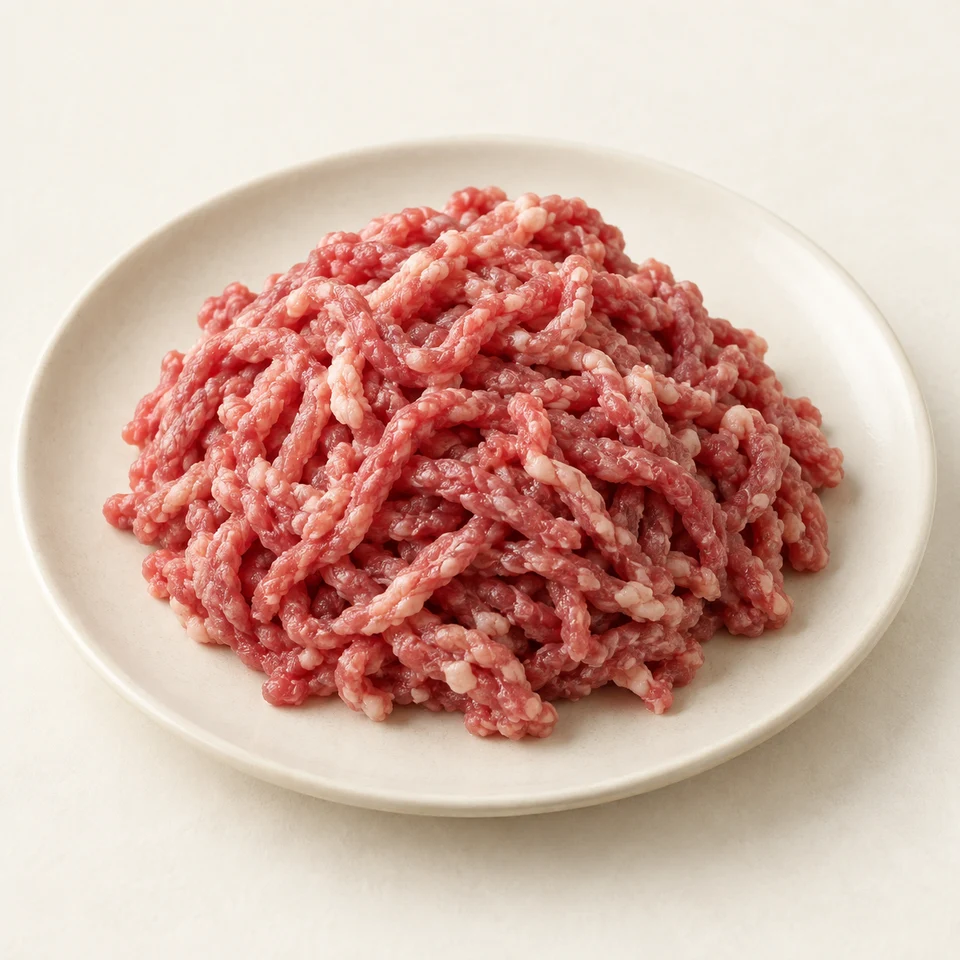
About Minced lamb
Minced lamb is lamb muscle and associated fat cut or ground into small pieces, rather than a distinct lamb cut. It is used for meatballs, kebabs, dumpling fillings, stuffed vegetables, burgers, pies, and stews.
Its flavour is characteristically savoury and lamb-like, with intensity depending on the cut and fat content. The mince is usually pink to red, with a soft, granular texture that can range from loose and crumbly to cohesive after mixing and cooking.
It may be sold fresh or packaged, with differences in coarseness and fat proportion. It can be shaped into patties or skewers, mixed with seasonings, or browned and simmered; these preparations alter its texture and cohesion.
- Ingredient type
- whole food
FOLLOW IT TO THE PLATE
Where will you meet it?
Explore the dishes that use this ingredient and their country and cuisine connections.
Explore linked dishesON A MENU OR LABEL
Find local names and written forms to help recognise this ingredient.
See local namesWhere minced lamb appears
9 linked foodsFind foods to recognise by country and type. Recipes and products vary; these are recorded ingredient connections.
Showing 1–9 of 9
Main dishes


Rice dishes
Breads

Gutap
Optional additionBreakfasts
Street food
Ingredient connections awaiting review · Coverage is still growing, including packaged snacks.
Name examples awaiting language review. Confirm the specific food or product.
Local names for minced lamb
Names and romanised forms to recognise on menus and labels.
minced lamb
ground lamb
carne de cordero picada
viande d’agneau hachée
Lammhackfleisch
carne d’agnello macinata
carne de borrego picada
kuzu kıyma
αρνίσιος κιμάς
arnísios kimás
لحم ضأن مفروم
laḥm ḍaʾn mafrūm
گوشت بره چرخکرده
gušt-e barre čarḵ-karde
मेमने का कीमा
memne kā kīmā
مَیمْنے کا قیمہ
meimne kā qīma
бараний фарш
baranij farš
羊肉末
yángròu mò
羊ひき肉
yō hikiniku
양고기 다진 것
yanggogi dajin geot
arnísios kimás
Romanised form
yō hikiniku
Romanised form
laḥm ḍaʾn mafrūm
Romanised form
yanggogi dajin geot
Romanised form
yángròu mò
Romanised form
memne kā kīmā
Romanised form
meimne kā qīma
Romanised form
baranij farš
Romanised form
gušt-e barre čarḵ-karde
Romanised form
Available names only. Languages may be spoken in other countries; a name alone does not identify every ingredient in a dish.
Name not available yet.
A name in English has not been added for minced lamb. Choose another language to see its available names.
Minced lamb nutrition & diet
Minced lamb nutritional value
Lamb, ground, raw
Per 100 g of the edible portion in the recorded food form.
- Calories
- 282kcal
- Protein
- 16.6g
- Carbs
- 0.0g
- Fat
- 23.4g
Reference values for the specific food form shown. Other varieties, brands and preparations can differ.
Portions & preparation
Specify whether the lamb is plain mince or a seasoned, formed product, and whether the reference uses raw or cooked meat. Cooking method, rendered fat, and draining affect the edible portion. Breadcrumbs, grains, oils, herbs, sauces, or vegetables should be assessed as recipe additions rather than assumed components.
Compare the right form: Match to plain minced lamb in the referenced raw or cooked state, including the stated edible portion and any declared fat or seasoning formulation.
Diet considerations
Minced lamb is animal-derived. Added pork, beef, dairy, egg, cereal binders, animal fats, or coatings can change compatibility. Kebabs, meatballs, dumplings, and filled dishes are recipe-dependent rather than interchangeable with plain lamb mince; review sauces, marinades, flavorings, and accompanying cereal ingredients.
AI-authored reading notes · Awaiting editorial review. Measured values, where available, have a separate source above.
Dietary compatibility
- VeganTypically incompatible
- VegetarianTypically incompatible
- PescatarianTypically incompatible
- KetoMay be compatible
- PaleoMay be compatible
- Low-carbMay be compatible
- HalalNot established
- KosherNot established
What these diet assessments mean
- Vegan · Typically incompatible
- The ingredient profile identifies an animal-derived food or derivative.
- Vegetarian · Typically incompatible
- The profile identifies animal flesh, seafood or a derivative excluded by a vegetarian diet.
- Pescatarian · Typically incompatible
- The profile identifies land-animal meat or a derivative, which is excluded by this pescatarian definition.
- Keto · May be compatible
- The plain form may fit a carbohydrate-restricted diet. Check the portion, added sugar, coatings and sauces against the nutrition values above.
- Paleo · May be compatible
- May fit a paleo pattern, depending on the cut or form, processing and added ingredients.
- Low-carb · May be compatible
- The plain form may fit a carbohydrate-restricted diet. Check the portion, added sugar, coatings and sauces against the nutrition values above.
- Halal · Not established
- Sourcing, processing and any applicable certification have not been verified. A food name alone does not establish halal status.
- Kosher · Not established
- Sourcing, processing and any applicable certification have not been verified. A food name alone does not establish kosher status.
For the plain ingredient · Awaiting review. Diet compatibility is not allergy suitability or halal/kosher certification. Keto and low-carb depend on the portion.
AI-generated illustration for visual context. It does not identify a particular product or establish allergen content.
Sources & review
Nutrition reference: USDA FoodData Central — Lamb, ground, raw ↗. Values are scaled from 100 g of the recorded edible form. Individual portions have no assumed fixed weight.
Expanded overview, name examples and nutrition notes are database drafts awaiting editorial review. Numeric nutrition values, where shown, have their own source and food-form reference.
The ingredient description and dish connections come from the draft catalogue and may change after review.
Last recorded verification: .