
Black-eyed pea
Black-eyed pea is a cream-colored legume with a dark spot, commonly cooked in stews, salads, and rice dishes.
About Black-eyed pea
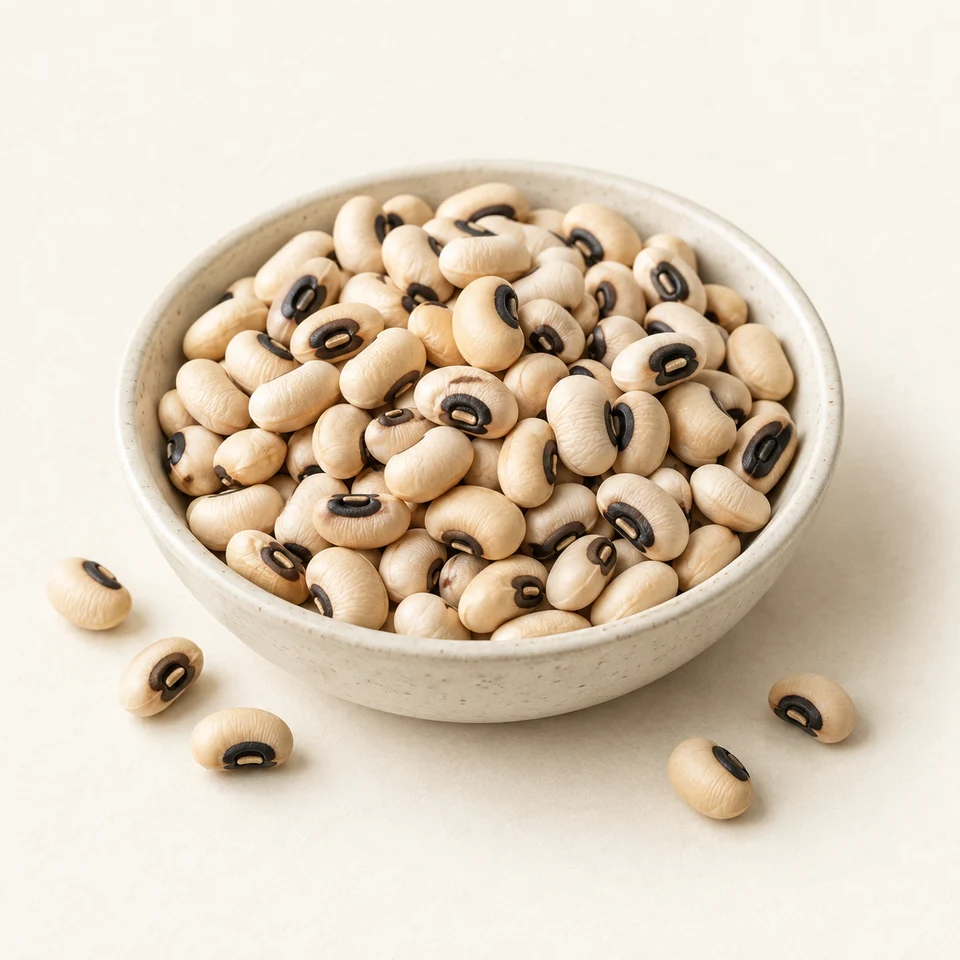
Black-eyed pea is a small cream-coloured legume with a dark mark at the seed’s hilum. It is used in soups, stews, salads, side dishes, and rice preparations, where the cooked peas often remain distinct.
The flavour is mild and earthy, and the texture becomes tender while usually holding its shape. The thin skin can retain a little firmness. In culinary usage, black-eyed pea overlaps with cowpea terminology, although market names may distinguish particular forms.
Black-eyed peas are sold dried, canned, or cooked. Dried peas are commonly soaked or boiled until tender; canned or prepared peas are drained before use. Cooking softens the centre while leaving some skin and structure intact.
- Ingredient type
- whole food
FOLLOW IT TO THE PLATE
Where will you meet it?
Explore the dishes that use this ingredient and their country and cuisine connections.
Explore linked dishesON A MENU OR LABEL
Find local names and written forms to help recognise this ingredient.
See local namesWhere black-eyed pea appears
29 linked foodsFind foods to recognise by country and type. Recipes and products vary; these are recorded ingredient connections.
Showing 1–12 of 29
Main dishes


Sides


Ingredient connections awaiting review · Coverage is still growing, including packaged snacks.
Name examples awaiting language review. Confirm the specific food or product.
Local names for black-eyed pea
Names and romanised forms to recognise on menus and labels.
black-eyed pea
pois à œil noir
frijol de carita
feijão-fradinho
Augenbohne
fagiolo dall’occhio
mongeta d’ull negre
black-eyed pea
fasola z czarnym oczkiem
fazole černé oko
fazuľa s čiernym očkom
grah crnookac
пасуљ црно око
pasulj crno oko
fasole cu ochi negru
feketeszemű bab
коровий горох
koroviy gorokh
коров’ячий горох
koroviachyi horokh
μαυρομάτικα φασόλια
mavromatika fasolia
börülce
لوبيا ذات العين السوداء
lubyā dhāt al-ayn al-sawdāʾ
לוביה שחורת עין
lubya shehorat ayin
svartögda bönor
sortøjebønner
svartøyebønner
mustasilmäpapu
黒目豆
kuromemame
동부콩
dongbukong
黑眼豆
hēiyǎndòu
đậu mắt đen
kacang tunggak bermata hitam
kacang tunggak mata hitam
ถั่วตาดำ
thua ta dam
लोबिया
lobiyā
বরবটি
barbaṭi
kunde
mavromatika fasolia
Romanised form
kuromemame
Romanised form
Blackeyed peas, from canned
Search alias · Not a confirmed translation
Blackeyed peas, from dried
Search alias · Not a confirmed translation
Blackeyed peas, from frozen
Search alias · Not a confirmed translation
Blackeyed peas, NFS
Search alias · Not a confirmed translation
lubyā dhāt al-ayn al-sawdāʾ
Romanised form
koroviachyi horokh
Romanised form
dongbukong
Romanised form
barbaṭi
Romanised form
hēiyǎndòu
Romanised form
lobiyā
Romanised form
koroviy gorokh
Romanised form
lubya shehorat ayin
Romanised form
pasulj crno oko
Romanised form
thua ta dam
Romanised form
Available names only. Languages may be spoken in other countries; a name alone does not identify every ingredient in a dish.
Name not available yet.
A name in English has not been added for black-eyed pea. Choose another language to see its available names.
Black-eyed pea nutrition & diet
Black-eyed pea nutritional value
Cowpeas, common (blackeyes, crowder, southern), mature seeds, raw
Per 100 g of the edible portion in the recorded food form.
- Calories
- 336kcal
- Protein
- 23.5g
- Carbs
- 60.0g
- Fat
- 1.3g
Per 100 g of the named reference food. Preparation, cultivar and product formulation can change these values; use the stated form when comparing.
Portions & preparation
Use a reference matching dry, soaked, boiled, canned, drained, or seasoned black-eyed peas. Cooking changes texture and edible weight, while draining or retaining liquid changes the portion. Plain peas differ from stews, salads, rice dishes, and fillings that add oil, salt, vegetables, meat, or other ingredients.
Compare the right form: Match dry, soaked, boiled, canned, drained, or rinsed black-eyed peas, specifying cooking liquid and whether seasonings or other ingredients are included.
Diet considerations
Black-eyed peas are plant-derived legumes. Plain cooked peas differ from versions prepared with bacon, ham, meat, poultry, dairy, or animal stock. Pairing with rice, breads, or other cereal ingredients can change carbohydrate patterns, and packaged products should be checked for added sauces, fats, and seasonings.
AI-authored reading notes · Awaiting editorial review. Measured values, where available, have a separate source above.
Dietary compatibility
- VeganTypically compatible
- VegetarianTypically compatible
- PescatarianTypically compatible
- KetoDepends on the version
- PaleoTypically incompatible
- Low-carbDepends on the version
- HalalNot established
- KosherNot established
What these diet assessments mean
- Vegan · Typically compatible
- The plain ingredient profile is plant, fungal or mineral based. Added ingredients in a prepared product need a separate check.
- Vegetarian · Typically compatible
- The plain ingredient profile is plant, fungal or mineral based. Added ingredients in a prepared product need a separate check.
- Pescatarian · Typically compatible
- The plain ingredient profile is plant, fungal or mineral based. Added ingredients in a prepared product need a separate check.
- Keto · Depends on the version
- Compatibility depends on the portion and preparation. A sourced carbohydrate amount for a defined serving is not available.
- Paleo · Typically incompatible
- This profile falls outside the conventional paleo pattern used here (grains and pseudograins, legumes, dairy or refined sugar).
- Low-carb · Depends on the version
- Compatibility depends on the portion and preparation. A sourced carbohydrate amount for a defined serving is not available.
- Halal · Not established
- Sourcing, processing and any applicable certification have not been verified. A food name alone does not establish halal status.
- Kosher · Not established
- Sourcing, processing and any applicable certification have not been verified. A food name alone does not establish kosher status.
For the plain ingredient · Awaiting review. Diet compatibility is not allergy suitability or halal/kosher certification. Keto and low-carb depend on the portion.
AI-generated illustration for visual context. It does not identify a particular product or establish allergen content.
Sources & review
Nutrition reference: USDA FoodData Central — Cowpeas, common (blackeyes, crowder, southern), mature seeds, raw ↗. Values are scaled from 100 g of the recorded edible form. Individual portions have no assumed fixed weight.
Expanded overview, name examples and nutrition notes are database drafts awaiting editorial review. Numeric nutrition values, where shown, have their own source and food-form reference.
The ingredient description and dish connections come from the draft catalogue and may change after review.
Last recorded verification: .