
Olive
An olive is the fruit of the olive tree, commonly cured and served as a condiment or added to salads and cooked dishes.
About Olive
An olive is the fruit of the olive tree, with firm flesh surrounding a hard pit. Freshly harvested olives are generally bitter and are commonly cured before eating. Cured fruit is served whole, pitted, sliced, or chopped as a condiment and added to salads, sauces, breads, and cooked dishes.
Flavour may be fruity, bitter, salty, or tangy, while texture can be crisp, firm, or soft. These differences reflect variety, maturity, and curing or other processing, and no single sensory profile applies to every olive.
Olives range from green to purple, brown, or black. They are sold fresh, cured, whole, pitted, sliced, or chopped; stuffing and curing liquid may also be present. Curing reduces bitterness and changes firmness, flavour, and colour, while cutting changes how quickly the fruit incorporates into a dish.
- Ingredient type
- whole food
Forms & related ingredients
FOLLOW IT TO THE PLATE
Where will you meet it?
Explore the dishes that use this ingredient and their country and cuisine connections.
Explore linked dishesON A MENU OR LABEL
Find local names and written forms to help recognise this ingredient.
See local namesWhere olive appears
41 linked foodsFind foods to recognise by country and type. Recipes and products vary; these are recorded ingredient connections.
Showing 1–12 of 41
Main dishes


Estofado Oaxaqueño
Optional addition
Ftira Ghawdxija
Optional addition


Pescado Frito Veracruzano
Optional additionIngredient connections awaiting review · Coverage is still growing, including packaged snacks.
Name examples awaiting language review. Confirm the specific food or product.
Local names for olive
Names and romanised forms to recognise on menus and labels.
olive
aceituna
oliva
olive
azeitona
oliva
oliva
oliba
Olive
olijf
olyf
zeytin
ελιά
eliá
оливка
olivka
оливка
olyvka
аліўка
aliŭka
oliwka
oliva
oliva
maslina
маслина
maslina
maslina
oliva
маслина
maslina
măslină
olajbogyó
ulliri
oliv
oliven
oliven
oliivi
ólífa
زيتونة
zaytūna
زیتون
zeytūn
זית
zayit
जैतून
jaitūn
زیتون
zaitūn
জলপাই
jalapāi
जैतून
jaitūn
ஆலிவ்
āliv
ఆలివ్
ālివ్
ಆಲಿವ್
āliv
ഒലിവ്
oliv
オリーブ
orību
올리브
ollibeu
橄榄
gǎnlǎn
มะกอก
makòk
ô liu
zaitun
zaitun
mzeituni
ზეთისხილი
zetiskhili
jaitūn
Romanised form
eliá
Romanised form
āliv
Romanised form
orību
Romanised form
arbequina olive
Search alias · Not a confirmed translation
Olive noire (aliment moyen)
Search alias · Not a confirmed translation
Olive noire, à l'huile (à la grecque)
Search alias · Not a confirmed translation
Olive noire, en saumure, égouttée
Search alias · Not a confirmed translation
pitted green olives
Search alias · Not a confirmed translation
pitted olive
Search alias · Not a confirmed translation
Pitted olives
Search alias · Not a confirmed translation
spanish olive (stuffed with spanish sweet pepper)
Search alias · Not a confirmed translation
āliv
Romanised form
aliŭka
Romanised form
zaytūna
Romanised form
olyvka
Romanised form
ollibeu
Romanised form
jalapāi
Romanised form
gǎnlǎn
Romanised form
jaitūn
Romanised form
oliv
Romanised form
zaitūn
Romanised form
olivka
Romanised form
maslina
Romanised form
zayit
Romanised form
zeytūn
Romanised form
maslina
Romanised form
zetiskhili
Romanised form
makòk
Romanised form
ālివ్
Romanised form
Available names only. Languages may be spoken in other countries; a name alone does not identify every ingredient in a dish.
Name not available yet.
A name in English has not been added for olive. Choose another language to see its available names.
Olive nutrition & diet
Olive nutritional value
Reference: Olive, green or black, drained
Per 100 g of the edible portion of the stated reference food.
- Calories
- 207.5kcal
- Protein
- 2.2g
- Carbs
- 0.0g
- Fat
- 21.7g
Reference example for the named food and preparation, per 100 g edible portion. This is not a universal value for every recipe or brand; packaged products should be compared with their own label. © Food Standards Australia New Zealand. AFCD Release 3, food F006198. Available carbohydrate excludes sugar alcohols; energy converted from kJ to kcal (÷4.184). Australian data may not be appropriate for use in other countries. There are limitations associated with food composition databases. Food composition data used in the database or databases may represent an average of the nutrient content of a particular sample of foods and ingredients, determined at a particular time. The nutrient composition of foods and ingredients can vary substantially between batches and brands because of a number of factors, including changes in season, processing practices and ingredient source, and methods of calculation. Data licensed under the FSANZ Data User Licence Agreement, based on CC BY-SA 3.0 AU: https://www.foodstandards.gov.au/science-data/monitoringnutrients/afcd/datauserlicenceagreement.
Portions & preparation
Specify whether the edible portion is fresh, cured, brined, dried, stuffed, or cooked, and include any retained pitted or stuffed material in the description. Drain or prepare as served when appropriate. Stuffings, marinades, and cooking oils can contribute separate ingredients, so they should not be attributed to plain olives.
Compare the right form: Match references to the olive variety and edible form—fresh, cured, brined, dried, pitted, stuffed, or cooked—rather than a generic olive.
Diet considerations
Olives are plant-derived fruit, but prepared products may contain fish, dairy, meat, or cereal-based fillings, coatings, or marinades. Compatibility therefore depends on the exact cured or stuffed form. Plain olives and olives served in a mixed dish should be recorded separately, especially when oils, sauces, or animal ingredients are added.
AI-authored reading notes · Awaiting editorial review. Measured values, where available, have a separate source above.
Dietary compatibility
- VeganTypically compatible
- VegetarianTypically compatible
- PescatarianTypically compatible
- KetoDepends on the version
- PaleoTypically compatible
- Low-carbDepends on the version
- HalalNot established
- KosherNot established
What these diet assessments mean
- Vegan · Typically compatible
- The plain ingredient profile is plant, fungal or mineral based. Added ingredients in a prepared product need a separate check.
- Vegetarian · Typically compatible
- The plain ingredient profile is plant, fungal or mineral based. Added ingredients in a prepared product need a separate check.
- Pescatarian · Typically compatible
- The plain ingredient profile is plant, fungal or mineral based. Added ingredients in a prepared product need a separate check.
- Keto · Depends on the version
- Compatibility depends on the portion and preparation. A sourced carbohydrate amount for a defined serving is not available.
- Paleo · Typically compatible
- The plain form fits the conventional paleo food groups. Added ingredients and individual interpretations can differ.
- Low-carb · Depends on the version
- Compatibility depends on the portion and preparation. A sourced carbohydrate amount for a defined serving is not available.
- Halal · Not established
- Sourcing, processing and any applicable certification have not been verified. A food name alone does not establish halal status.
- Kosher · Not established
- Sourcing, processing and any applicable certification have not been verified. A food name alone does not establish kosher status.
For the plain ingredient · Awaiting review. Diet compatibility is not allergy suitability or halal/kosher certification. Keto and low-carb depend on the portion.
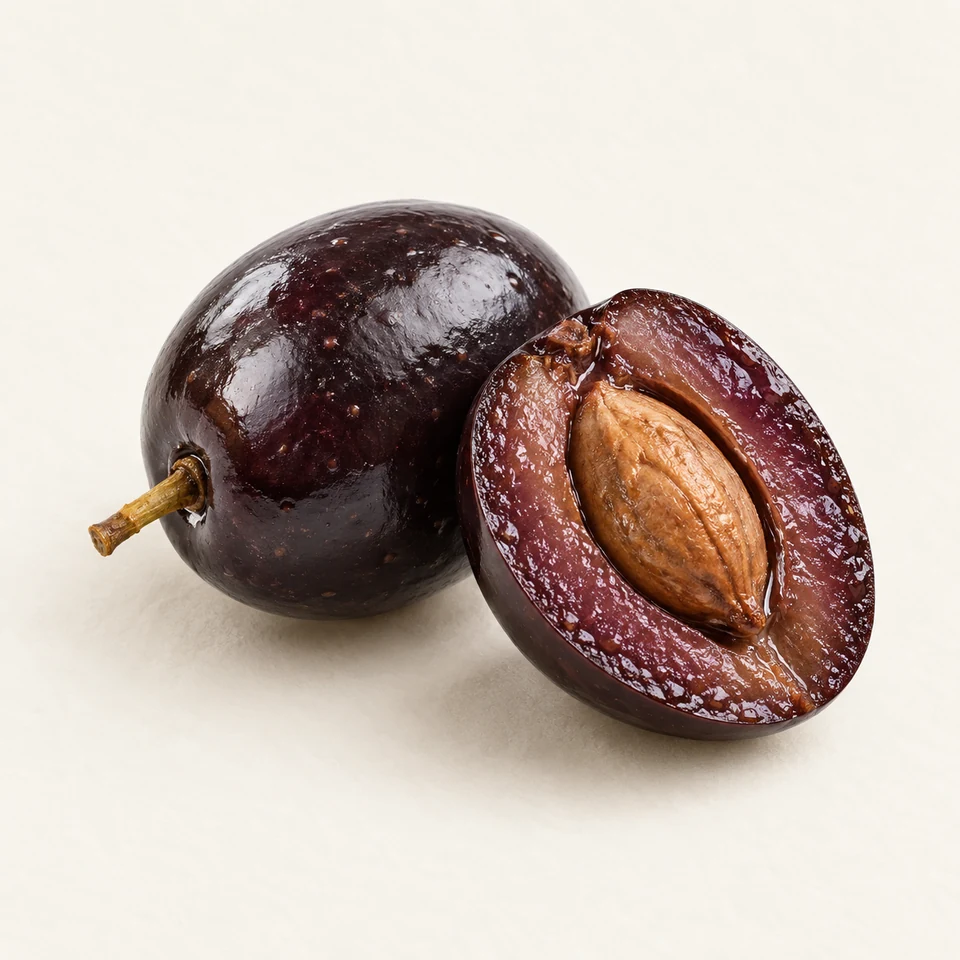
AI-generated illustration for visual context. It does not identify a particular product or establish allergen content.
Sources & review
Nutrition reference: Australian Food Composition Database, Release 3, 2025 — Olive, green or black, drained ↗. Values are scaled from 100 g of the recorded edible form. Individual portions have no assumed fixed weight.
Expanded overview, name examples and nutrition notes are database drafts awaiting editorial review. Numeric nutrition values, where shown, have their own source and food-form reference.
The ingredient description and dish connections come from the draft catalogue and may change after review.
Last recorded verification: .