Understanding wheat in Maldives
Read the complete meal: its base, sauces, stock, seasonings, coatings, garnishes and preparation. A familiar dish name does not establish the recipe used for the serving in front of you.
This guide keeps every selected food together. A recorded connection identifies something worth checking; a missing connection leaves the ingredient status unknown.
Relevant food context for Maldives
Flatbreads and filled pastries: Roshi and huni roshi are wheat-flour flatbreads; masroshi combines a roshi wrapper with smoked tuna filling. Bajiya, gulha and keemia are recorded with wheat-flour pastry or wrappers and tuna-based fillings. Ask whether the dough contains egg, whether fillings are prepared separately, and whether baking or frying uses shared equipment.
Wheat flour: Wheat flour forms the recorded bases or wrappers for roshi, huni roshi, bajiya, gulha, keemia, masroshi and rihaakuru folhi. Ask about flour in pastry, batter, crumbs and shared preparation surfaces, rather than relying on the dish name.
Resort restaurant or buffet: Ask the chef or server which dishes contain tuna, fish paste, wheat, egg or coconut, and whether broth or curry sauce is shared. At a buffet, ask whether serving spoons, grills or pans are shared, and request a freshly prepared portion only if the kitchen confirms the ingredients and method.
Malé hotaa: For a local meal, ask whether the rice comes with garudhiya, fish seasoning, curry or a separate sauce. With mas huni, roshi or fish snacks, check every component: tuna type, grated coconut, wheat, chilli, lime, oil and shared utensils.
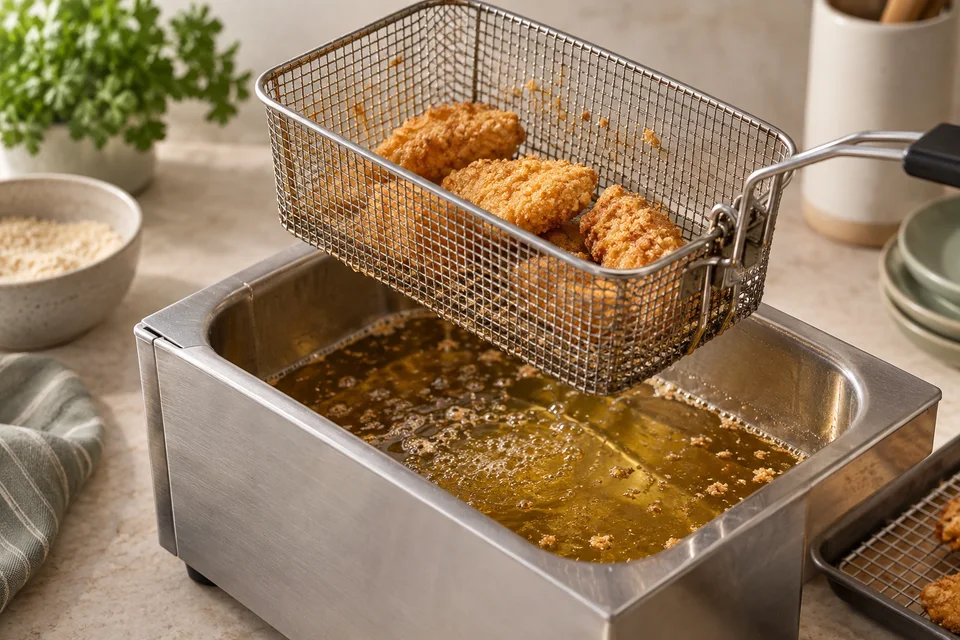
Fried-snack counter: Before ordering bajiya, gulha, keemia, kavaabu or theluli mas, ask what is in the filling, pastry and batter. Ask whether the fryer oil is shared with wheat-coated or other filled foods, and whether the item is fried on a shared surface.