Understanding wheat in Poland
Read the complete meal: its base, sauces, stock, seasonings, coatings, garnishes and preparation. A familiar dish name does not establish the recipe used for the serving in front of you.
This guide keeps every selected food together. A recorded connection identifies something worth checking; a missing connection leaves the ingredient status unknown.
Relevant food context for Poland
Soups, stocks and sour bases: Soup is a prominent part of Polish meals, but its base matters. Krupnik uses pearl barley and may draw on celery seasoning; rosół commonly uses celery and wheat noodles. Żurek, white borscht and zalewajka use fermented rye starters, while tomato and cucumber soups may add cream or wheat noodles. Ask about stock, thickener, starter, garnish and serving addition rather than relying on the soup name.
Dumplings, grains and filled dishes: Pierogi have wheat wrappers and may contain fresh cheese, butter or egg, with fillings that include meat, cheese and onion, or fruit. Gołąbki are cabbage rolls with grain and meat, sometimes bound with egg. Kopytka and pyzy are potato dumplings whose flour and egg can vary. Ask whether the dough is made separately, what binds it, and whether butter or sauce is added after cooking.
Breads, pastries and sweet counters: Bread and bakery recipes differ: obwarzanek is a wheat dough with sesame as a common topping, while cebularz uses wheat flour in its flatbread dough. Mazurek, szarlotka, sernik, piernik, makowiec, pączki and faworki commonly bring together wheat, egg and dairy in different combinations; some use nuts. Ask about fillings, decoration, glaze, crumb base, egg wash and the counter’s handling.
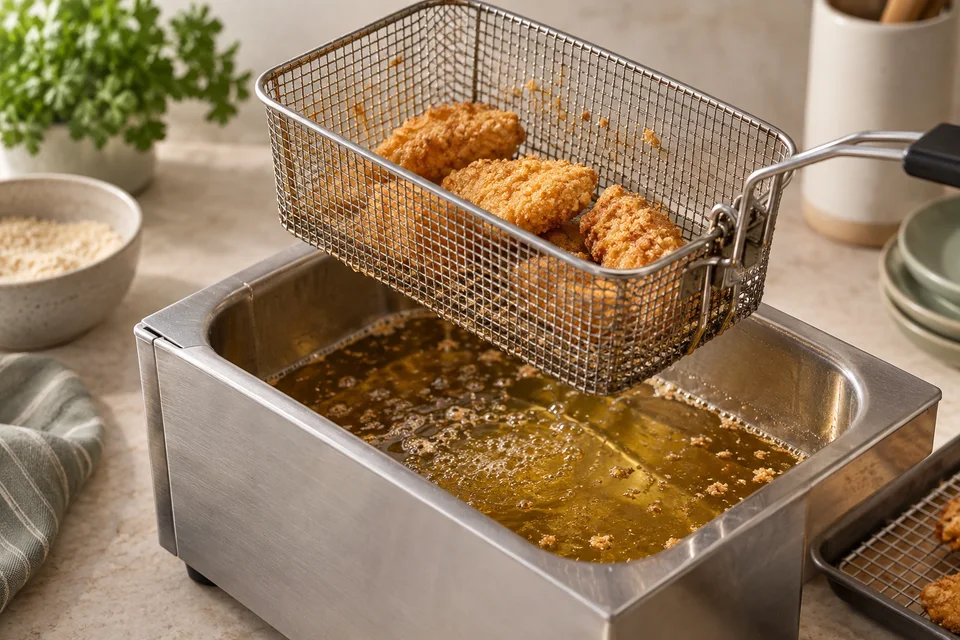
Fish, meat and regional examples: Herring appears in Kashubian preparation and in marinades; fish is also sold smoked or battered, so ask about the complete marinade, batter and cooking oil. Kotlet schabowy uses a wheat-and-egg coating, while Polish-style fish may include celery in its braised vegetables. Kraków maczanka is served in a wheat roll. Regional names signal a food context, not a fixed recipe.
Wheat flour: Wheat flour forms the dough or thickener in pierogi, faworki, cebularz, mazurek and several soups, and appears in coatings and dumplings. Ask whether it is in the main dough, a roux, breadcrumb mix or a separate garnish. An allergy question and a gluten or coeliac question are not identical.