Understanding wheat in Belgium
Read the complete meal: its base, sauces, stock, seasonings, coatings, garnishes and preparation. A familiar dish name does not establish the recipe used for the serving in front of you.
This guide keeps every selected food together. A recorded connection identifies something worth checking; a missing connection leaves the ingredient status unknown.
Relevant food context for Belgium
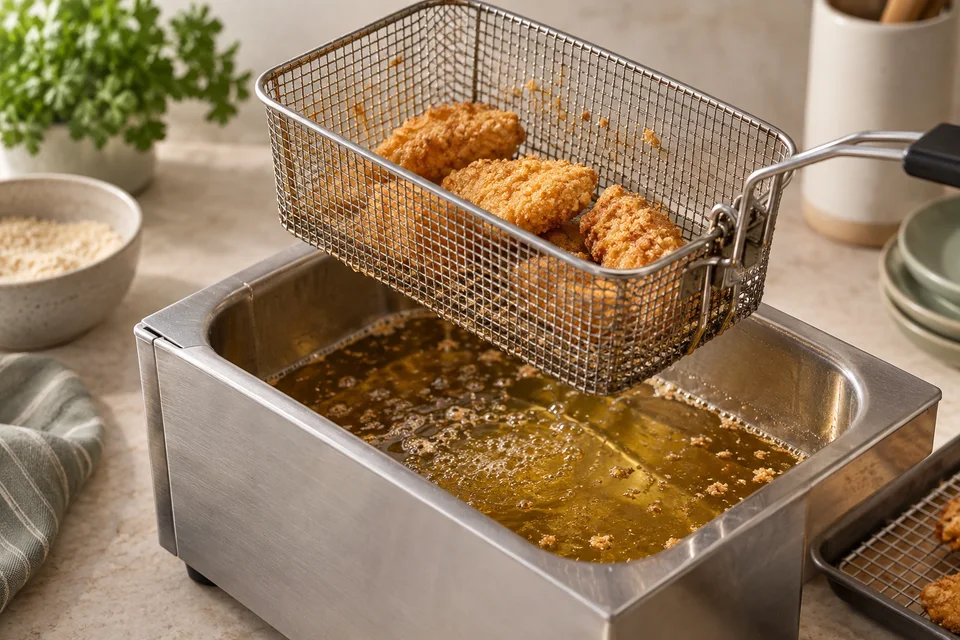
Fries, frituur food and sauces: A frituur or friterie may serve fries alongside fried meat, sandwiches and a wide choice of sauces. A mitraillette commonly combines a wheat-flour roll with mayonnaise, while fries may be served with Flemish beef stew. Ask about the roll, meat mixture, sauce, fryer oil and shared baskets rather than ordering by name alone.
Stews, meatballs and stock: Flemish beef stew may use butter for browning, bread as a wheat-containing thickener and mustard for seasoning. Liège meatballs commonly use egg and wheat breadcrumbs, while rabbit preparations may include butter and mustard. Ask whether beef broth, chicken stock, beer, bread, mustard or a separate sauce is included in the exact recipe.
Pastry, waffles and sweets: Brussels waffles are commonly made with wheat flour, milk and egg, and may receive powdered sugar, cream or fruit. Liège waffles commonly use enriched dough with butter, milk and egg. Belgian rice tart, pralines, speculoos and dame blanche each have different possible dairy, egg, wheat, nut or soy details, so check the actual serving.
Wheat flour: Recorded in pistolet, waffles, tarts, pastry, croquettes and biscuits, and used in sauces or binders. Ask whether wheat flour, breadcrumbs or a wheat-based roll is present, and distinguish wheat from gluten when explaining your concern.
Belgian Beer: Beer may be part of cooking, including rabbit in gueuze, and some Belgian styles use wheat alongside barley. Ask which beer is used in a sauce or braise, whether the recipe includes it directly, and whether another stock or seasoning is added.