Understanding fish in Poland
Read the complete meal: its base, sauces, stock, seasonings, coatings, garnishes and preparation. A familiar dish name does not establish the recipe used for the serving in front of you.
This guide keeps every selected food together. A recorded connection identifies something worth checking; a missing connection leaves the ingredient status unknown.
Relevant food context for Poland
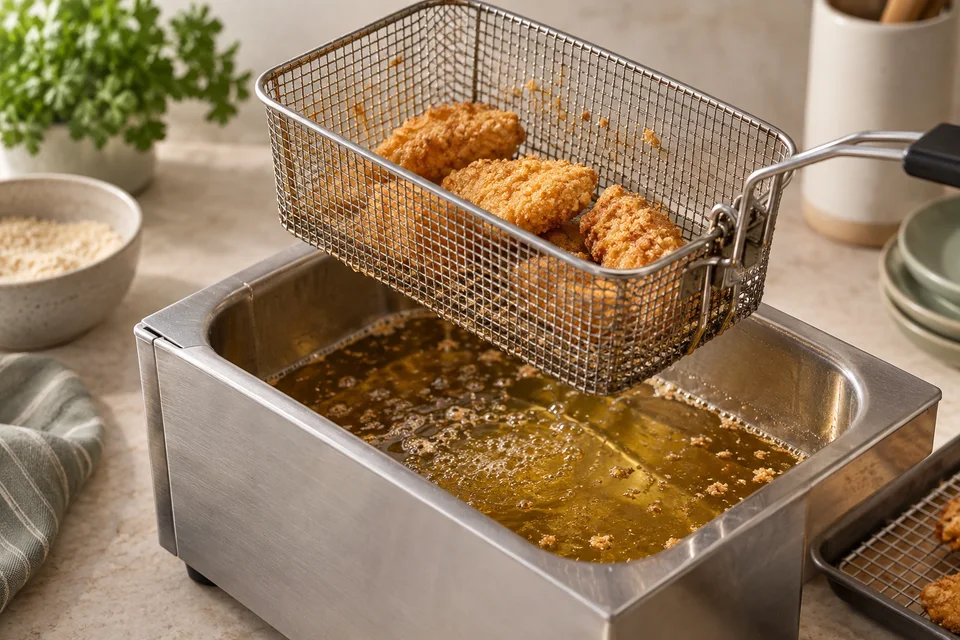
Fish, meat and regional examples: Herring appears in Kashubian preparation and in marinades; fish is also sold smoked or battered, so ask about the complete marinade, batter and cooking oil. Kotlet schabowy uses a wheat-and-egg coating, while Polish-style fish may include celery in its braised vegetables. Kraków maczanka is served in a wheat roll. Regional names signal a food context, not a fixed recipe.
Celery: Celery is recorded in krupnik, cucumber soup, rosół, tomato soup, tripe soup and Polish-style fish, often through an aromatic vegetable or stock base. Ask about fresh celery, powdered seasoning, stock cubes and the braised vegetable mixture, including whether the broth was made separately.
Herring: Herring is central to Śledź po Kaszubsku and can also be served in vinegar or oil marinades, battered or smoked. Ask which fish is used, what the marinade or batter contains, whether the fish shares oil, and whether sauces or toppings are added before serving.
Market or smoked-fish counter: When buying herring, mackerel or another smoked fish, ask which species it is, whether it is plain or marinated, and what oil, vinegar, seasoning or glaze was used. Ask whether fish is cut or packed with other products and request the complete packaged ingredients where available.
Using this guide
Open Dishes to investigate recorded local connections, Ingredients & hidden sources to follow component paths, Shopping & labels for names and package checks, and Eating out for a complete kitchen conversation.