Understanding fish in Gambia
Read the complete meal: its base, sauces, stock, seasonings, coatings, garnishes and preparation. A familiar dish name does not establish the recipe used for the serving in front of you.
This guide keeps every selected food together. A recorded connection identifies something worth checking; a missing connection leaves the ingredient status unknown.
Relevant food context for Gambia
Rice, stew and changing proteins: Benachin or Jollof rice may include onions, spices, tomatoes or tomato paste, combined with meat, fish or vegetables. Fish is a common Benachin variation. Ask whether the rice was cooked with a stock, protein or sauce, and whether toppings were added afterwards.
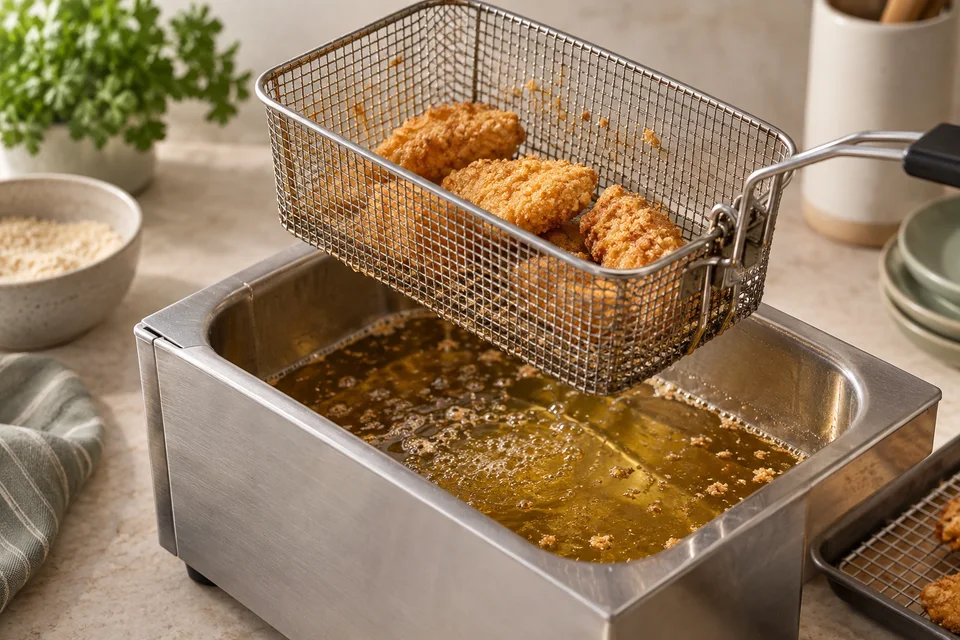
Fish in different forms: Fish is defining or core in Caldo, Ebbeh, Kankalang and Gambian fish balls, and is a common choice in pepper soup, Superkanja and some Plasas or Nyambeh Nyebbeh preparations. Ask for the species where relevant, and check stocks, coatings, binders and shared serving utensils.
Filled, creamy and marinated foods: Fataya may have a fish filling and wheat-flour pastry dough. Gambian fish balls may use egg and wheat flour as binder or coating. Chakery is recorded with wheat-semolina couscous, yoghurt and commonly cow milk; Sombi has cow milk as a core ingredient. Yassa variations may use fish and mustard.
Fish: Fish may be the defining or core ingredient in dishes such as Caldo, Ebbeh, Kankalang and fish balls, or a variation in Benachin and Yassa. Ask which fish is used, whether stock contains fish, and whether serving tools are shared.
Wheat flour: Wheat flour forms Fataya pastry dough and is commonly used as a binder or coating for Gambian fish balls. Ask whether flour is present in fillings or coatings, and whether frying equipment is shared with other foods.
Using this guide
Open Dishes to investigate recorded local connections, Ingredients & hidden sources to follow component paths, Shopping & labels for names and package checks, and Eating out for a complete kitchen conversation.