Understanding fish in Cambodia
Read the complete meal: its base, sauces, stock, seasonings, coatings, garnishes and preparation. A familiar dish name does not establish the recipe used for the serving in front of you.
This guide keeps every selected food together. A recorded connection identifies something worth checking; a missing connection leaves the ingredient status unknown.
Relevant food context for Cambodia
Rice, noodles and breakfast bowls: Rice appears in bai cha and bai sarch ch’rouk, while fried noodles and kuy teav offer different noodle-based meals. Kuy teav broth may be seasoned with fish sauce and a bowl can be finished to taste with lime, chilli powder or sugar. Ask whether the noodles, stock and toppings are prepared separately, and whether a seafood version uses prawns or other seafood.
Curries, soups and sour flavours: Amok trey is a steamed curry presented in banana leaf or coconut, with fish as its defining protein and egg commonly mixed into the coconut custard. Sour soups may combine fish with pineapple and tomatoes. Ask about coconut, egg, fish, stock and finishing sauces individually; a curry or soup name does not establish its complete recipe.
Street snacks, bread and fruit: Nom pang is a wheat-flour baguette that may contain pork, pâté, mayonnaise or fish-based seasoning. Chek chien commonly uses wheat flour and may include sesame. Fresh fruit, coconut waffles, sweetmeats, ice, condensed milk and sugar water appear in different snacks. Ask about batter, fillings, toppings, utensils and whether ingredients are added after cooking.
Fish: Fish is central to amok trey, num banh chok and several sour soups; fish-based seasoning also occurs in recorded recipes. Ask whether the protein, broth, paste, dressing or sauce contains fish, including when the main dish is meat or vegetables.
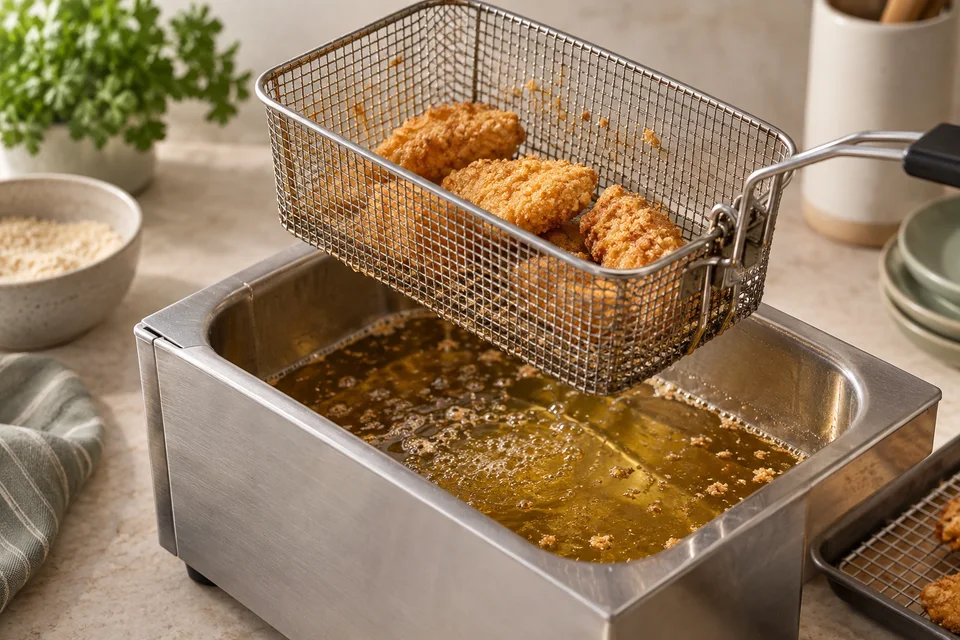
Market or street stall: Point to the exact item and ask whether it contains fish sauce, fermented fish, dried shrimp, peanut, egg or wheat. Ask if toppings are added from a shared container, whether the wok or fryer is shared, and whether the stall can prepare the portion without the ingredient.
Using this guide
Open Dishes to investigate recorded local connections, Ingredients & hidden sources to follow component paths, Shopping & labels for names and package checks, and Eating out for a complete kitchen conversation.